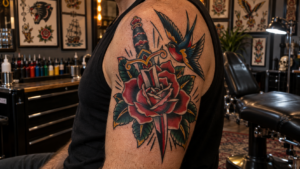
Embroidery patch tattoos in 2026 are bringing the familiar appearance of sewn fabric badges into an unexpected place: human skin. These tattoos use carefully drawn stitch textures, colorful borders, highlights, and subtle drop shadows to create the illusion that a real embroidered patch has been attached to an arm, leg, or shoulder. At first glance, …
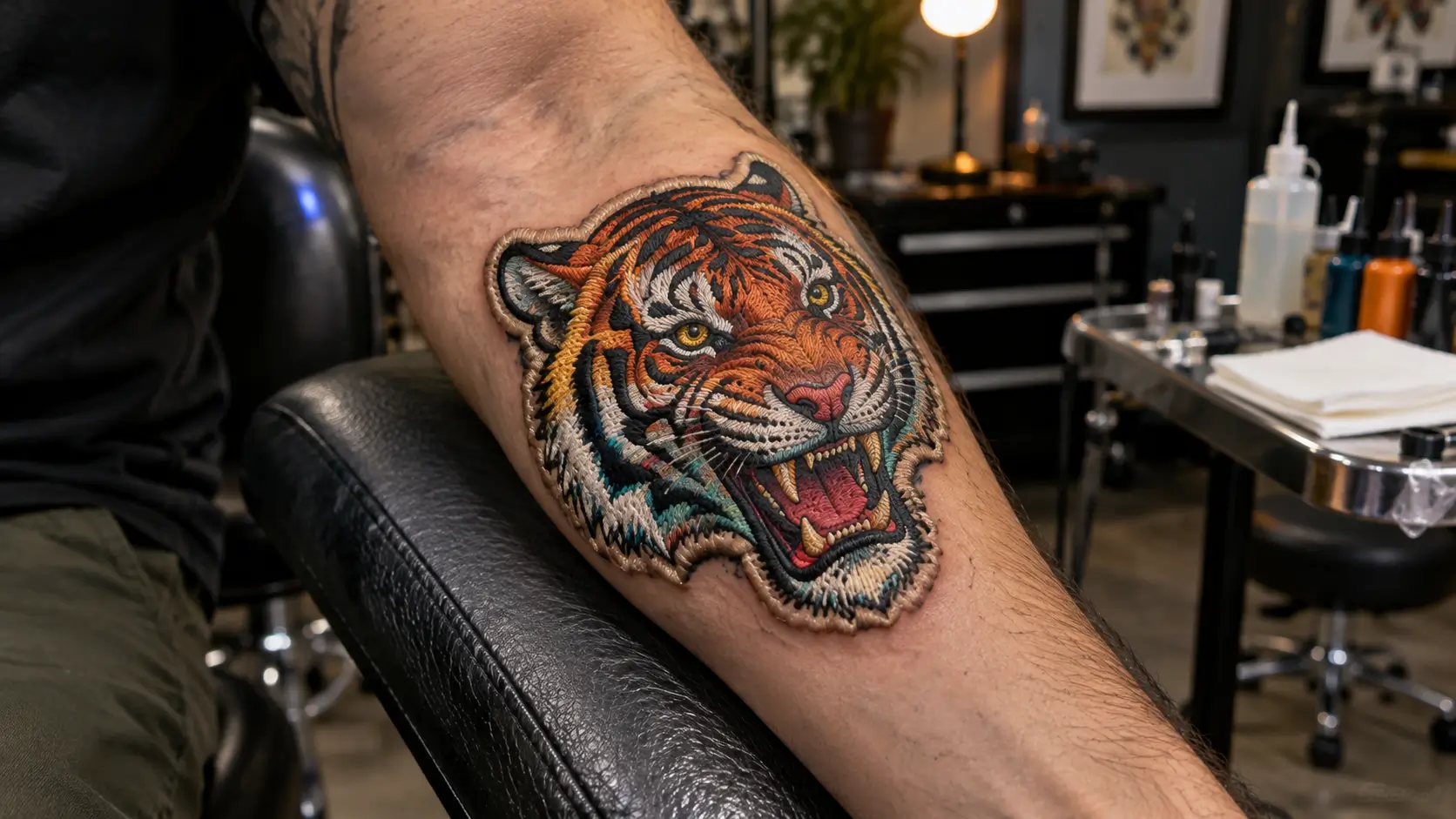
Embroidery patch tattoos in 2026 are bringing the familiar appearance of sewn fabric badges into an unexpected place: human skin. These tattoos use carefully drawn stitch textures, colorful borders, highlights, and subtle drop shadows to create the illusion that a real embroidered patch has been attached to an arm, leg, or shoulder.
At first glance, the design might look like a patch from a favorite jacket or backpack. A closer look reveals that every apparent thread is tattooed ink. The style combines illustrative drawing, color realism, and optical illusion, appealing to collectors who want their tattoos to feel playful and dimensional.
A 2026 patch tattoo style guide examines how borders, shadow, and texture sell the effect. Tattoo artists featured in Sortra’s coverage of embroidered patch tattoos show how recognizable characters and bold graphics can look surprisingly close to actual fabric. The style is not a new physical embroidery process; it is tattooing designed to imitate one.
What Is an Embroidery Patch Tattoo?
An embroidery patch tattoo is a tattoo made to resemble a stitched cloth badge. Unlike flat graphic tattoos, it often includes individually suggested threads, a raised-looking outer seam, fabric grain, and shading just outside the border to make the patch appear to sit above the skin.
The illusion can be created using several visual tricks:
- Short, directional marks that resemble embroidery stitches.
- Closely controlled color changes that suggest overlapping thread.
- A thick, stitched-looking outline around the patch.
- A slight shadow under one edge to imply thickness.
- Small highlights that separate the design from the skin.
The finished artwork is still a permanent tattoo applied within the skin. It does not contain actual thread, fabric, adhesive, or raised embroidery.
Why Embroidery Patch Tattoos Stand Out in 2026
One appeal is familiarity. People recognize embroidered badges from sports uniforms, scout patches, denim jackets, travel souvenirs, workwear, and favorite childhood accessories. Translating that familiar texture into body art creates an immediate visual surprise.
Another appeal is personalization. Almost any clear, strongly shaped symbol can inspire a patch-style composition. Animals, cartoon-inspired figures, flowers, food, hobby icons, and landscape emblems can be redrawn with stitch-like shading.
Icon Tattoo’s discussion of the embroidered patch trend connects this aesthetic with nostalgia, folk-art textures, and realism. The most successful designs balance those references with sound tattoo fundamentals: readable shapes, enough scale, and an experienced artist.
Popular Embroidered Patch Tattoo Designs
Animals and Pet-Inspired Patches
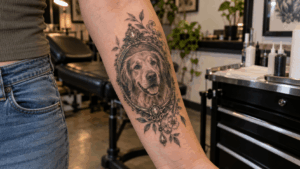
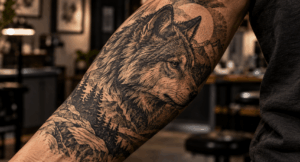
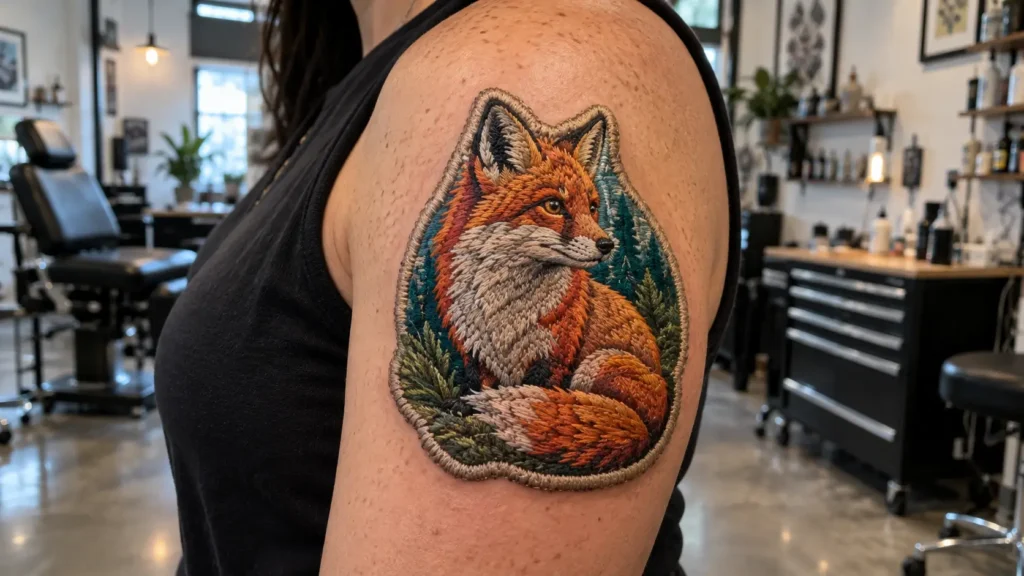
A fox, dog, cat, bird, or tiger can look like a sewn badge when its silhouette is simple enough to read clearly. Directional stitches can suggest fur or feathers, while a bold border keeps the patch effect recognizable.
Flowers and Botanical Badges
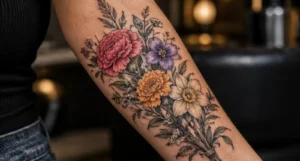
Roses, daisies, wildflowers, leaves, and mushrooms suit embroidered texture especially well. Petals can be shaded with short lines that follow their shape, creating the appearance of thread laid in different directions.
Retro Symbols and Travel Emblems
Mountains, suns, moons, stars, surfboards, camping scenes, and retro-style badges can mimic the collectible patches sewn onto jackets and backpacks. These motifs often have simple, strong silhouettes that suit tattooing.
Pop-Culture-Inspired Illustrations
Some tattoo collectors want a childhood character or nostalgic symbol rendered like a jacket patch. If the design uses existing copyrighted artwork, discuss originality and permissions with your artist rather than assuming any online picture can be copied freely.
How Tattoo Artists Create the Stitch Illusion
The most important factor is the relationship between the design’s major shapes and its apparent stitching. In real embroidery, threads follow directions chosen to fill each section. Tattoo artists imitate that rhythm with clusters of marks and color transitions.
For example, a flower petal might contain short lines fanning outward from the center. A leaf might use angled stitches alongside its central vein. Those directional changes make the image feel embroidered instead of simply dotted or heavily shaded.
The outer border is equally important. An embroidered badge often has a thick, wrapped-looking edge. A tattoo artist can suggest that edge with repeated curved marks, strong contrast, and a narrow shadow where the imagined badge meets the skin.
Because the illusion depends on texture, a skilled artist decides which details should be suggested instead of drawing every microscopic thread. More detail is not automatically better, especially on skin that changes over time.
Embroidery Patch Tattoos vs. 3D Illusion Tattoos
Both styles rely on the viewer’s perception of depth, but the goals differ. A 3D illusion tattoo might depict machinery pushing through skin or a butterfly casting a realistic shadow. An embroidery patch tattoo is more specific: it tries to recreate the appearance of colored thread, cloth, and a stitched border.
For examples of depth, perspective, and shadow techniques, see Painless Ric’s article on 3D illusion tattoos. Patch designs can also borrow the clear silhouettes and saturated colors found in American Traditional tattooing, but add surface texture instead of flat color fields.
Best Placement Options
Upper Arm
The outer upper arm offers room for a medium-sized patch, including a border and detailed interior stitching. It is a useful choice for circular emblems, animal portraits, and vintage-style badges.
Forearm
A patch tattoo on the forearm remains visible and can be oriented vertically or diagonally. Keep the design large enough to prevent the apparent stitches from crowding together.
Calf
The calf provides generous space for badges, retro travel designs, and larger colorful characters. Its shape can complement elongated patches or shield-like compositions.
Thigh and Shoulder
These areas can support a larger, detailed design or multiple patches forming a collection. Placement should account for body curves so the border looks deliberately fitted rather than distorted.
Will Embroidery Patch Tattoos Age Well?
Every tattoo changes over time. Sun exposure, natural skin changes, friction, pigment placement, and design density can affect the appearance of stitches and shading. Tiny lines positioned close together may become less distinct, reducing the embroidered illusion.
Painless Ric’s Tattoo Aging Guide offers broader advice about sizing and long-term care. The American Academy of Dermatology recommends protecting healed tattoos from UV exposure to help reduce fading.
An experienced artist may strengthen the outer border, simplify a complicated shape, or slightly enlarge the piece so that its defining features have room to remain legible.
Choosing the Right Tattoo Artist
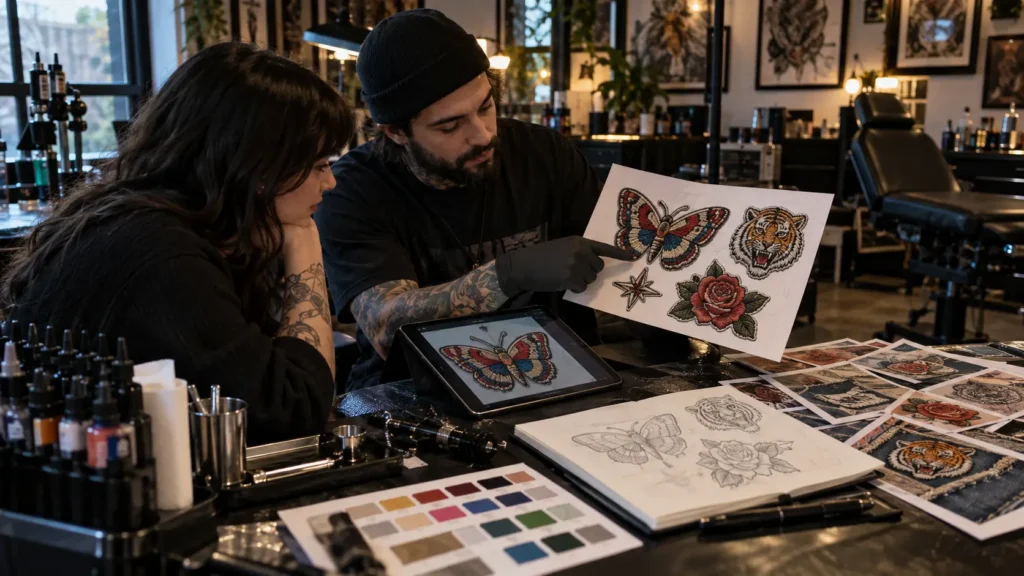
Search for healed examples of embroidered-patch tattoos or similarly demanding texture-realism work. A general color tattoo portfolio is helpful, but the patch effect requires specific attention to repeated marks, shading, and border construction.
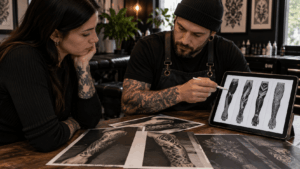
During consultation, ask how the artist plans to create the illusion of thread, what size is appropriate, and whether the design will remain readable from a normal viewing distance. Bring a real embroidered patch as inspiration if possible. It can reveal the direction and layering of actual stitches more clearly than a filtered online image.
Professional hygiene remains essential regardless of the complexity of the artwork. The FDA’s tattoo safety information describes potential ink-related concerns, and Mayo Clinic advises choosing trained professionals who follow appropriate sanitation practices.
Aftercare for Detailed Patch Tattoos
Fresh embroidery patch tattoos should be treated as healing skin, not as ordinary fabric patches. Follow your artist’s instructions for cleaning, moisturizing, and protecting the area. Avoid picking at peeling skin, soaking a fresh tattoo, or exposing it to avoidable friction.
The Cleveland Clinic’s tattoo aftercare resource explains general healing practices. Painless Ric’s Tattoo Aftercare Guide also covers cleaning and long-term maintenance. Seek medical advice promptly if you notice worsening pain, spreading redness, pus, fever, or other signs of a possible complication.
Final Thoughts
Embroidery patch tattoos in 2026 combine nostalgia, colorful illustration, and impressive visual illusion. Their appeal comes from transforming a familiar stitched object into a convincing image made entirely of ink.
Whether the subject is a flower, animal, travel emblem, or personal symbol, successful patch tattoos need strong silhouettes, thoughtful stitch textures, enough space, and careful shading. Choose an artist who understands how the effect works on living skin and who can adapt the design for healed clarity, not only fresh photographs.