American Traditional tattoos in 2026 are proving that classic tattooing never really disappears. While futuristic designs, microrealism, fine linework, and digital-inspired styles continue evolving, a growing number of collectors are returning to bold outlines, saturated colors, recognizable imagery, and straightforward compositions. American Traditional — also called traditional or old-school tattooing — is instantly recognizable. Roses, …
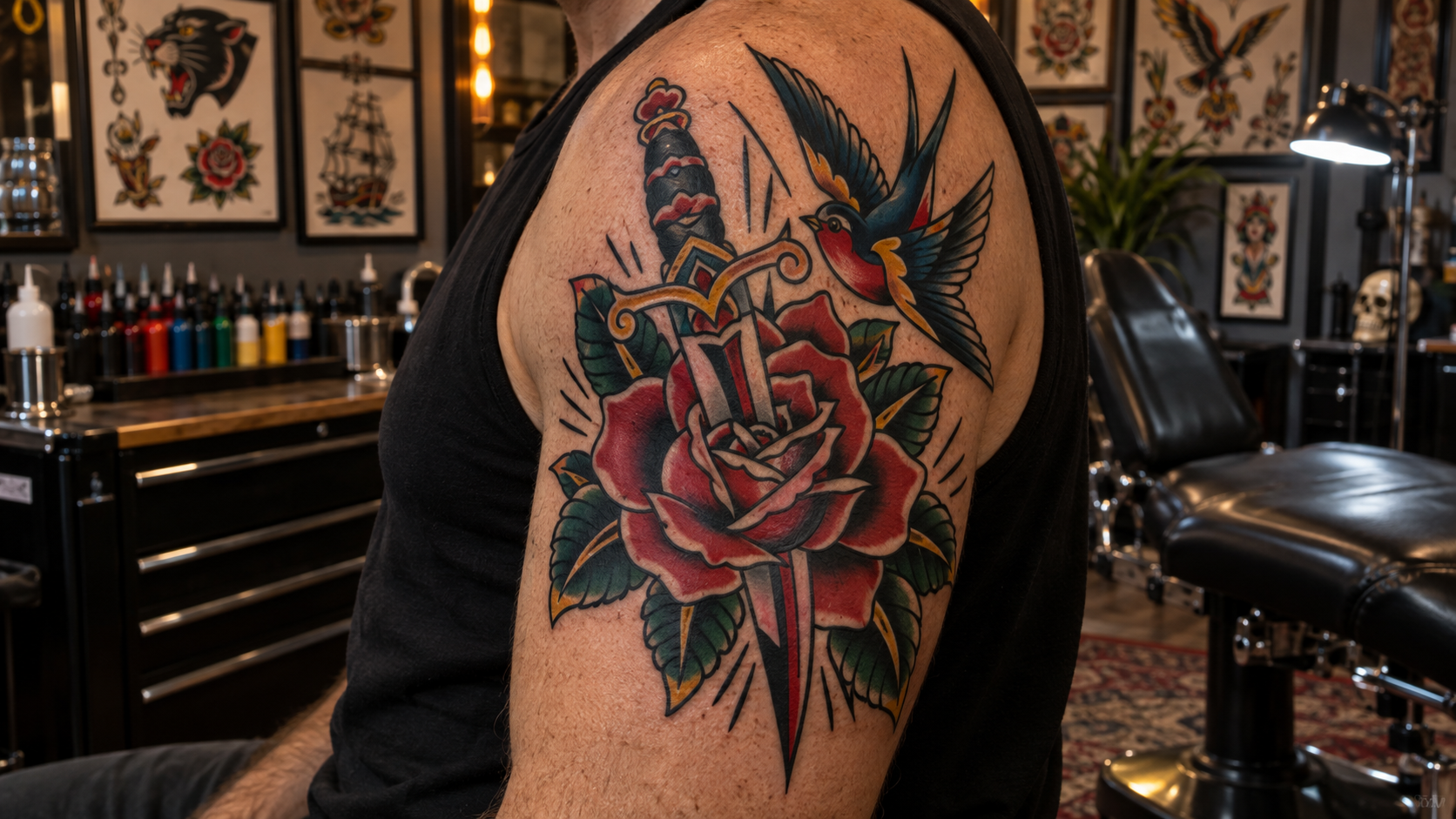
American Traditional tattoos in 2026 are proving that classic tattooing never really disappears. While futuristic designs, microrealism, fine linework, and digital-inspired styles continue evolving, a growing number of collectors are returning to bold outlines, saturated colors, recognizable imagery, and straightforward compositions.
American Traditional — also called traditional or old-school tattooing — is instantly recognizable. Roses, eagles, swallows, panthers, daggers, hearts, snakes, anchors, ships, skulls, and other classic subjects are usually built with confident black outlines and strong areas of color.
At Painless Ric’s Tattoo Studio, traditional tattoo principles provide an interesting contrast to highly detailed trends such as microrealism tattoos. Both can create impressive artwork, but they use very different approaches to line, detail, color, and readability.
Why American Traditional Is Trending Again
One reason for the renewed interest is longevity. Many tattoo collectors are thinking more carefully about how artwork will read not only when fresh but years later.
A 2026 trend review from United Tattoo identifies American Traditional as a style that continues holding strong, while other current trend reporting points to renewed interest among younger collectors.
The style’s relatively simple construction can also feel refreshing in an era filled with extremely intricate artwork. Instead of trying to reproduce photographic detail, traditional tattooing prioritizes silhouette, contrast, recognizable imagery, and visual impact.
What Defines American Traditional Tattooing?
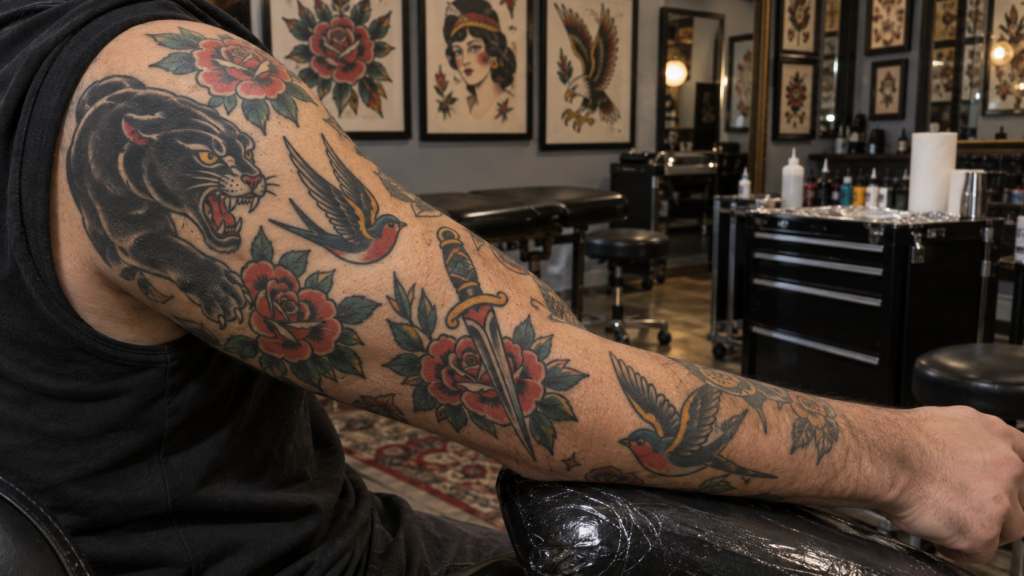
American Traditional is built around several recognizable visual principles.
Bold Black Outlines
Strong outlines give each subject a clearly defined silhouette. The tattoo should remain recognizable even when viewed from a distance.
Strong, Limited Color
Classic palettes commonly emphasize red, yellow, green, black, and selected blues or other accents. Colors are usually applied as solid, readable areas rather than extremely subtle gradients.
Clear Composition
Traditional pieces avoid unnecessary visual clutter. Every element has a clear purpose, allowing the main subject to remain easy to identify.
Iconic Flash Imagery
Traditional flash includes recurring motifs such as roses, daggers, eagles, swallows, panthers, snakes, ships, anchors, hearts, skulls, and pin-up figures.
The Naval History and Heritage Command documents the long relationship between sailors and tattoo traditions, helping explain why nautical imagery remains so closely associated with old-school American tattooing.
A Brief Look at Traditional Tattoo History
Modern American tattooing developed through many artists, ports, military communities, traveling tattooers, and cultural influences rather than one single inventor.
The Smithsonian Institution notes that Samuel O’Reilly patented an electric tattoo machine in 1891, helping change the speed and mechanics of tattooing in the United States.
Norman “Sailor Jerry” Collins later became one of the most influential figures associated with twentieth-century American Traditional tattooing. A history published by Sailor Jerry describes how Collins worked in Honolulu and combined bold American imagery with techniques influenced by Japanese tattooing.
Those historical influences continue to shape flash sheets and traditional tattoo design today.
Classic Motifs and Their Visual Appeal
Roses
Roses are among the most recognizable traditional tattoo subjects. Their layered petals work well with bold outlines and strong red, yellow, or black shading.
Swallows
Swallows have long associations with maritime tattoo culture. Their compact silhouette makes them adaptable to the chest, shoulder, hands, arms, and legs.
Daggers
Daggers create strong vertical compositions and can be combined with roses, hearts, snakes, skulls, or banners.
Panthers and Big Cats
Traditional panthers use bold black shapes and dynamic movement. Their silhouettes work particularly well across shoulders, forearms, thighs, and calves.
Eagles
Eagles provide strong symmetrical or spread-wing compositions and can work as larger chest, back, or upper-arm pieces.
The 2026 Twist: Classic Imagery in New Placements
The current revival does not mean every collector wants an exact recreation of an old flash sheet. Artists are using traditional visual rules while experimenting with scale, spacing, and placement.
A small classic rose might appear behind the ear. A dagger can follow the hand or shin. Traditional flash can also be collected gradually to create a patchwork sleeve rather than one continuous composition.
That flexibility allows collectors to respect the visual language of traditional tattooing while creating arrangements that feel contemporary.
Why Bold Tattoos Can Age Well
No tattoo remains completely unchanged, but traditional designs are intentionally built around clarity. Strong outlines, open spacing, and recognizable shapes can help the subject remain visually readable as skin changes.
That does not eliminate the need for care. UV exposure can contribute to fading, while skin naturally changes throughout life.
Painless Ric’s Tattoo Aging Guide explains factors that can affect tattoo appearance over time. The American Academy of Dermatology also recommends protecting healed tattooed skin from excessive sun exposure.
American Traditional vs. Neo-Traditional
American Traditional and Neo-Traditional share some visual DNA, particularly bold outlines and strong compositions, but they should not be treated as identical.
Traditional designs generally use simpler shapes, a narrower palette, and established iconography. Neo-Traditional tattooing expands the range of subjects and commonly introduces more complex shading, decorative framing, dimensional color, and illustration-inspired details.
Someone who loves bold tattoo structure but wants jewel tones, elaborate animal portraits, Art Nouveau influences, or more dimensional shading may prefer Neo-Traditional. Someone attracted to classic flash, immediate readability, and simpler color blocking may prefer American Traditional.
Building a Traditional Patchwork Collection
Traditional flash is especially well suited to collections built gradually. Each tattoo can work as an individual piece while sharing compatible outlines, color palettes, and visual weight with future tattoos.
A client might begin with a rose, later add a swallow or dagger, then continue filling the arm with separate pieces. Small gaps can preserve the classic patchwork appearance.
This approach allows a collection to evolve over time rather than requiring an entire sleeve to be planned during the first appointment.
Color Choices Matter
Traditional tattooing is famous for strong color, but restraint is one of its strengths. Using a limited palette helps maintain visual unity and prevents complex compositions from becoming difficult to read.
Solid reds, greens, yellows, blues, and black shading create contrast without needing dozens of subtle tones. Clients who prefer black-and-gray work can also adapt traditional subjects without abandoning the characteristic outline and composition.
Safety and Aftercare
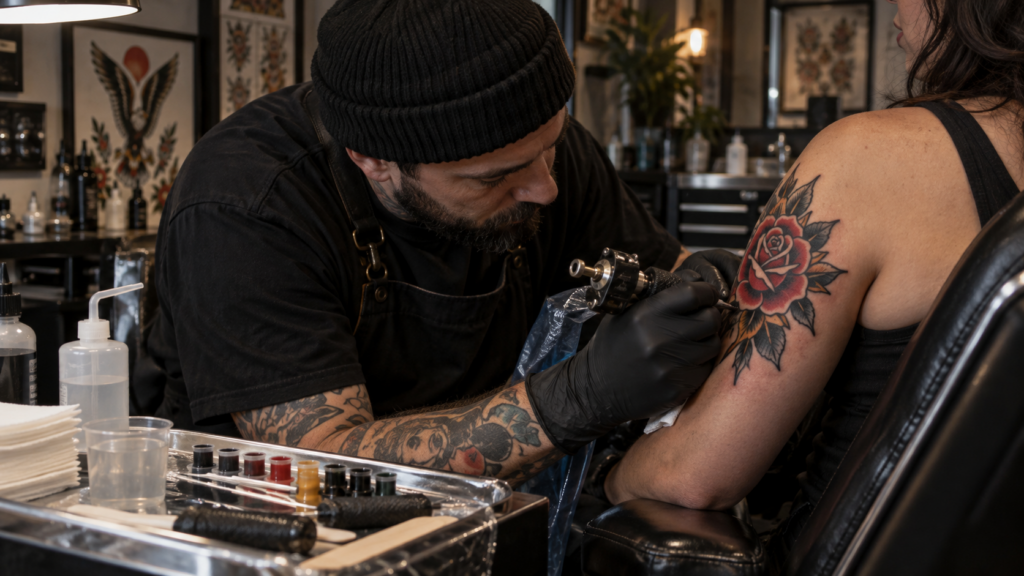
Traditional tattooing may look straightforward, but professional technique and sanitation remain essential.
The FDA’s tattoo information covers tattoo inks, contamination concerns, allergic reactions, and other safety considerations. Mayo Clinic also recommends choosing a reputable professional studio that follows appropriate hygiene practices.
After the appointment, follow your artist’s instructions and review Painless Ric’s Tattoo Aftercare Guide for general information about cleaning, moisturizing, healing, and protecting new tattoos.
Choosing the Right Traditional Tattoo
Start by identifying the subjects that appeal to you rather than simply selecting the most popular flash image. A traditional tattoo can follow established visual conventions while still becoming personal through color, placement, supporting elements, and custom drawing.
Review an artist’s portfolio for clean healed outlines, even saturation, smooth shading, balanced compositions, and experience with traditional work.
Flash designs can be an excellent starting point, but custom variations can make familiar imagery feel personal without losing the qualities that define the style.
Final Thoughts
American Traditional tattoos in 2026 show why classic tattoo design continues surviving new trends. Bold outlines, strong color, recognizable imagery, and readable composition give the style a visual identity that remains effective more than a century after modern American tattooing began developing.
The current revival is not simply nostalgia. Younger collectors are combining classic imagery with contemporary placements, patchwork collections, custom details, and modern studio techniques.
For anyone drawn to straightforward design, bold visual impact, tattoo history, and artwork built around long-term readability, American Traditional remains one of the strongest styles to explore.