Y2K tattoos in 2026 are bringing butterflies, star clusters, tribal-inspired curves, flames, chrome effects, barbed wire, tiny hearts, lower-back designs, and other early-2000s aesthetics back into modern tattoo studios. The revival is not simply a copy of tattoo trends from twenty-five years ago. Artists are updating familiar motifs with finer lines, improved spacing, contemporary blackwork, …
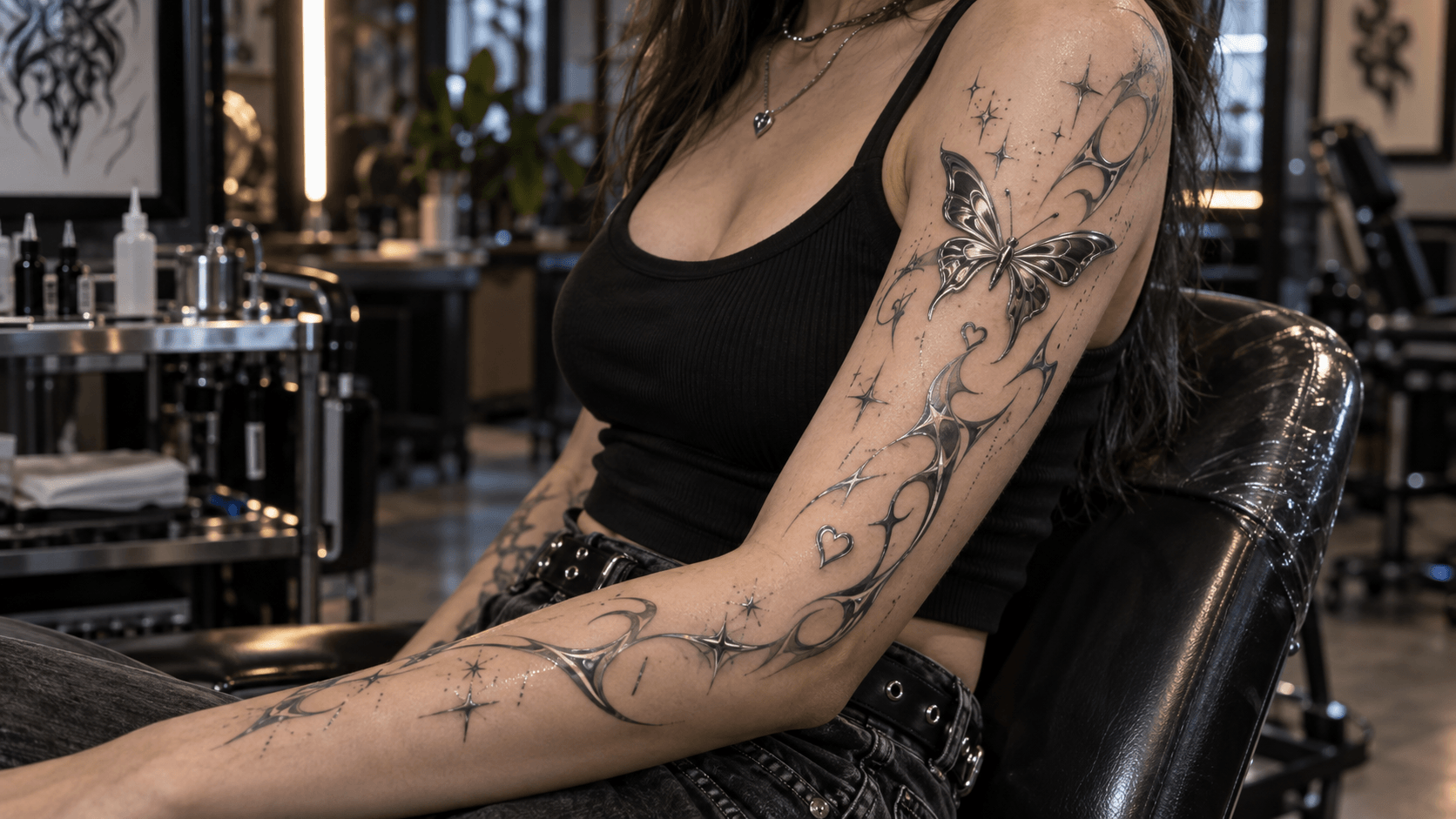
Y2K tattoos in 2026 are bringing butterflies, star clusters, tribal-inspired curves, flames, chrome effects, barbed wire, tiny hearts, lower-back designs, and other early-2000s aesthetics back into modern tattoo studios.
The revival is not simply a copy of tattoo trends from twenty-five years ago. Artists are updating familiar motifs with finer lines, improved spacing, contemporary blackwork, metallic-looking shading, microrealism, negative space, and more deliberate placement.
Current tattoo trend reporting shows nostalgia playing a major role in 2026. Allure’s tattoo trend coverage highlights renewed interest in imagery from the 1970s through early 2000s, while Origin Tattoo London’s 2026 trend report specifically identifies Y2K elements such as tribal flames, chrome butterflies, and barbed wire as part of a broader nostalgic fusion movement.
What Does Y2K Mean in Tattoo Design?
Y2K refers broadly to the visual culture surrounding the late 1990s and early 2000s. The era mixed futuristic optimism with pop culture, glossy digital graphics, metallic colors, cyber aesthetics, playful fashion, and rebellious tattoo motifs.
Common Y2K tattoo references include:
- Butterflies
- Star clusters
- Tribal-inspired flames
- Barbed wire
- Chrome hearts
- Metallic-looking symbols
- Lower-back symmetrical designs
- Small cursive words
- Hearts and cherries
- Cyber-inspired graphics
A modern Y2K tattoo does not need to include every element. Often one recognizable motif is enough to create the nostalgic effect.
Why Y2K Tattoos Are Trending Again
Fashion and design often move in cycles. As early-2000s clothing, accessories, music references, and digital aesthetics return, tattoo imagery is following the same pattern.
Tori Tattoo’s 2026 Y2K guide describes how early-2000s symbols are being reinterpreted through modern fine-line techniques rather than simply recreating heavier originals.
The attraction is different depending on the wearer. For millennials, the designs may feel connected to adolescence or early adulthood. For younger collectors, Y2K imagery can feel retro in the same way previous generations rediscovered styles from the 1970s or 1980s.
Modern execution also gives artists more freedom to combine nostalgia with current tattoo aesthetics.
Chrome Butterfly Tattoos
Butterflies were everywhere in early-2000s fashion and body art, and they have returned as one of the clearest Y2K tattoo references.
The 2026 version can look very different from older designs. Artists may use chrome-inspired highlights, iridescent colors, delicate fine-line wings, microrealistic shading, or futuristic geometric accents.
Some clients prefer a completely black-and-gray butterfly with metallic-looking highlights, while others choose blue, pink, purple, silver-inspired, or rainbow gradients.
Chrome effects can also overlap visually with futuristic tattoo styles. The goal is usually to create the illusion of reflective metal through strategic light and dark areas rather than actual metallic tattoo ink.
The Return of Tribal-Inspired Curves
Bold tribal-looking shapes were highly visible during the late 1990s and early 2000s. Their return requires more thoughtful consideration because traditional Indigenous tattoo systems and generic commercial “tribal” graphics should not be treated as the same thing.
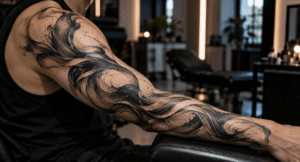
Many 2026 Y2K pieces use abstract neo-tribal curves, symmetrical flames, tapered spikes, or cyber-inspired blackwork rather than copying culturally specific tattoo patterns.
The visual influence also overlaps with cybersigilism and contemporary abstract blackwork, allowing artists to create designs that reference the early 2000s without simply reproducing old flash.
Lower-Back Tattoos Are Back
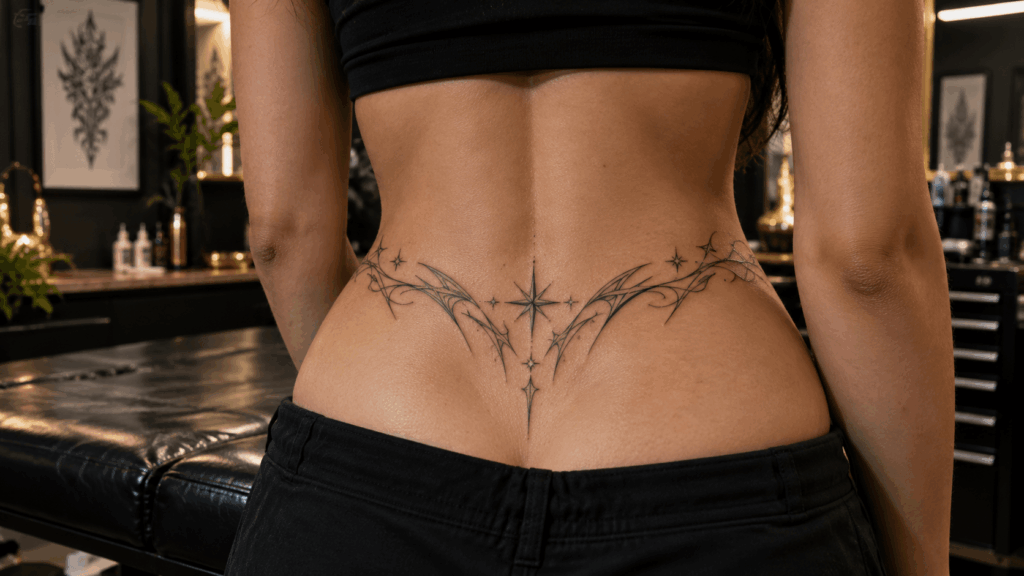
One of the most recognizable Y2K placements is the lower back. Once dismissed as dated, symmetrical lower-back tattooing is being reconsidered by a new generation.
Modern versions often use:
- Fine symmetrical linework
- Botanical curves
- Neo-tribal shapes
- Stars and ornamental accents
- Abstract wings
- Delicate flame-like forms
Placement planning is essential because the design should follow the natural horizontal curve of the lower back rather than looking like a flat decal.
Stars, Hearts, Cherries, and Playful Symbols
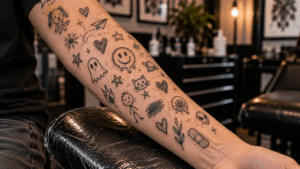
Not every Y2K tattoo needs to be large. Tiny stars, hearts, cherries, flames, dice, smiley faces, and decorative symbols can capture the aesthetic in a more subtle way.
These designs work well as individual tattoos or as part of a gradually built collection.
The current interest in small nostalgic imagery also overlaps with contemporary patchwork approaches where separate tattoos remain visually independent rather than forming one continuous sleeve.
Barbed Wire Gets a Modern Update
Barbed-wire tattoos were once associated with heavy armbands, but current versions can be much lighter and more abstract.
Fine linework can wrap around the wrist, ankle, upper arm, or other placements without creating the visual weight of older solid-black versions.
Artists may also combine barbed-wire shapes with hearts, butterflies, stars, flowers, or cyber-inspired elements.
Y2K Script and Tiny Lettering
Small cursive words and short phrases can complement the Y2K aesthetic, particularly around the collarbone, hip, ankle, wrist, or lower back.
However, extremely small script may become harder to read as it ages. Letter spacing, line weight, and overall scale should be considered before choosing the smallest possible stencil.
Painless Ric’s Custom Script Tattoos in 2026 guide explains why spacing and readability matter when turning handwriting or lettering into permanent body art.
Y2K Tattoos and Cybersigilism
Some contemporary Y2K pieces overlap with cybersigilism because both aesthetics use tapered black lines, sharp curves, digital-looking shapes, and futuristic symbolism.
Cybersigilism often feels darker and more complex, while a Y2K tattoo may lean toward playful nostalgia through butterflies, stars, hearts, flames, or chrome-inspired graphics.
The two approaches can also be combined. For example, a butterfly may have sharp cyber-style wings or an early-2000s heart can be surrounded by abstract sigil-like linework.
How to Keep a Y2K Tattoo From Feeling Like a Costume
The strongest nostalgic tattoos usually reinterpret the era rather than reproducing every recognizable symbol at once.
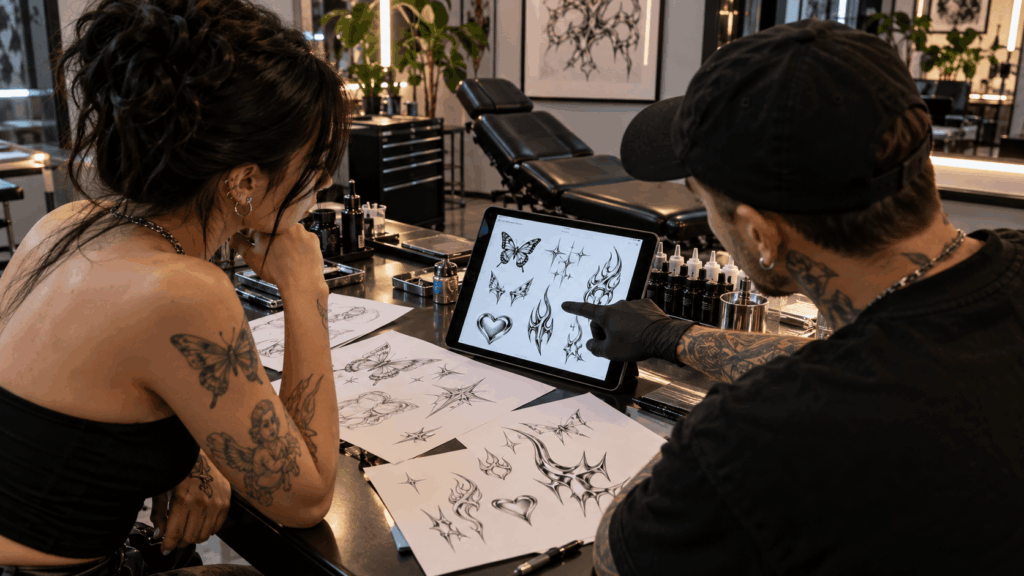
Choose one or two elements that actually connect with your personal style. A chrome butterfly may be enough. Someone else may prefer a modernized lower-back composition or a simple cluster of stars.
Scale and placement can also make retro imagery feel more intentional. A tattoo should work with your body and existing collection rather than being chosen solely because a particular image is currently popular.
How Y2K Tattoos Age
A tattoo’s long-term appearance depends more on execution, scale, line spacing, placement, pigment, and care than on whether its imagery is fashionable.
Very fine details and tightly packed lines may soften over time. Stronger outlines and adequate negative space can help preserve readability.
Painless Ric’s Tattoo Aging Guide explains how sun exposure, placement, skin changes, and design choices can affect long-term appearance.
The American Academy of Dermatology recommends protecting healed tattooed skin from excessive ultraviolet exposure.
Aftercare and Tattoo Safety
Whether the design is retro or futuristic, a new tattoo still requires proper healing and professional hygiene.
The Cleveland Clinic provides general tattoo-aftercare guidance, including information about cleaning and healing.
The FDA’s tattoo and permanent makeup fact sheet discusses tattoo inks, possible contamination, allergic reactions, and other considerations.
Mayo Clinic also recommends choosing a reputable professional studio and confirming that proper sanitation practices are used.
For practical healing guidance, read Painless Ric’s Tattoo Aftercare Guide.
Choosing a Modern Y2K Tattoo
Start by deciding which part of the era actually appeals to you. Is it the glossy chrome aesthetic, playful butterflies, cyber graphics, star clusters, symmetrical lower-back designs, or bold flame motifs?
Bring references that communicate those qualities rather than asking an artist to copy another person’s tattoo.
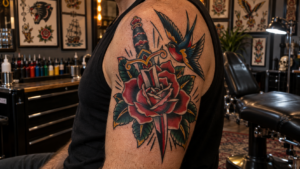
You can also compare the bold structure of nostalgic work with Painless Ric’s American Traditional Tattoos in 2026 article. Both demonstrate how older visual languages can return while being adapted for contemporary collectors.
Final Thoughts
Y2K tattoos in 2026 show how tattoo culture continually revisits and reshapes its own history. Butterflies, star clusters, lower-back designs, tribal-inspired curves, barbed wire, hearts, flames, and metallic-looking effects are returning, but today’s artists are approaching them with different techniques and placement strategies.
The strongest designs use nostalgia as inspiration rather than a rulebook. By choosing meaningful imagery, leaving enough space for the tattoo to age, and adapting the composition to the body, a Y2K tattoo can feel current without losing the playful energy that made the original era memorable.
For collectors who love early-internet graphics, pop nostalgia, cyber aesthetics, and the return of once-dismissed tattoo motifs, 2026 offers plenty of ways to reinterpret Y2K body art.