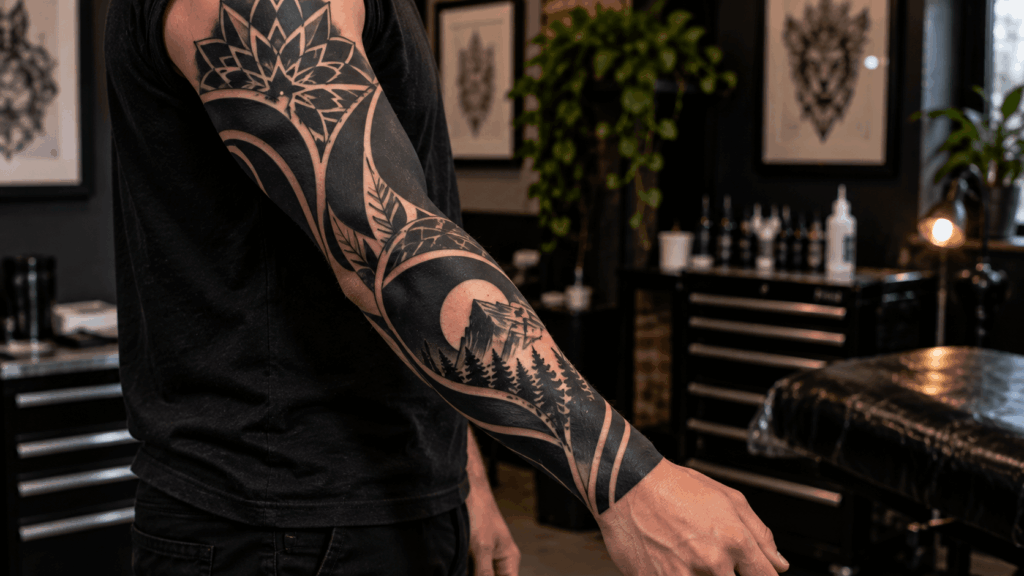
Negative-space blackout tattoos are one of the boldest body-art directions gaining attention in 2026. Instead of covering an entire section of skin with uninterrupted black ink, modern blackout work increasingly uses uninked skin as part of the design. Geometric cutouts, botanical silhouettes, stripes, mandalas, flowing curves, and abstract openings can break up large black areas …
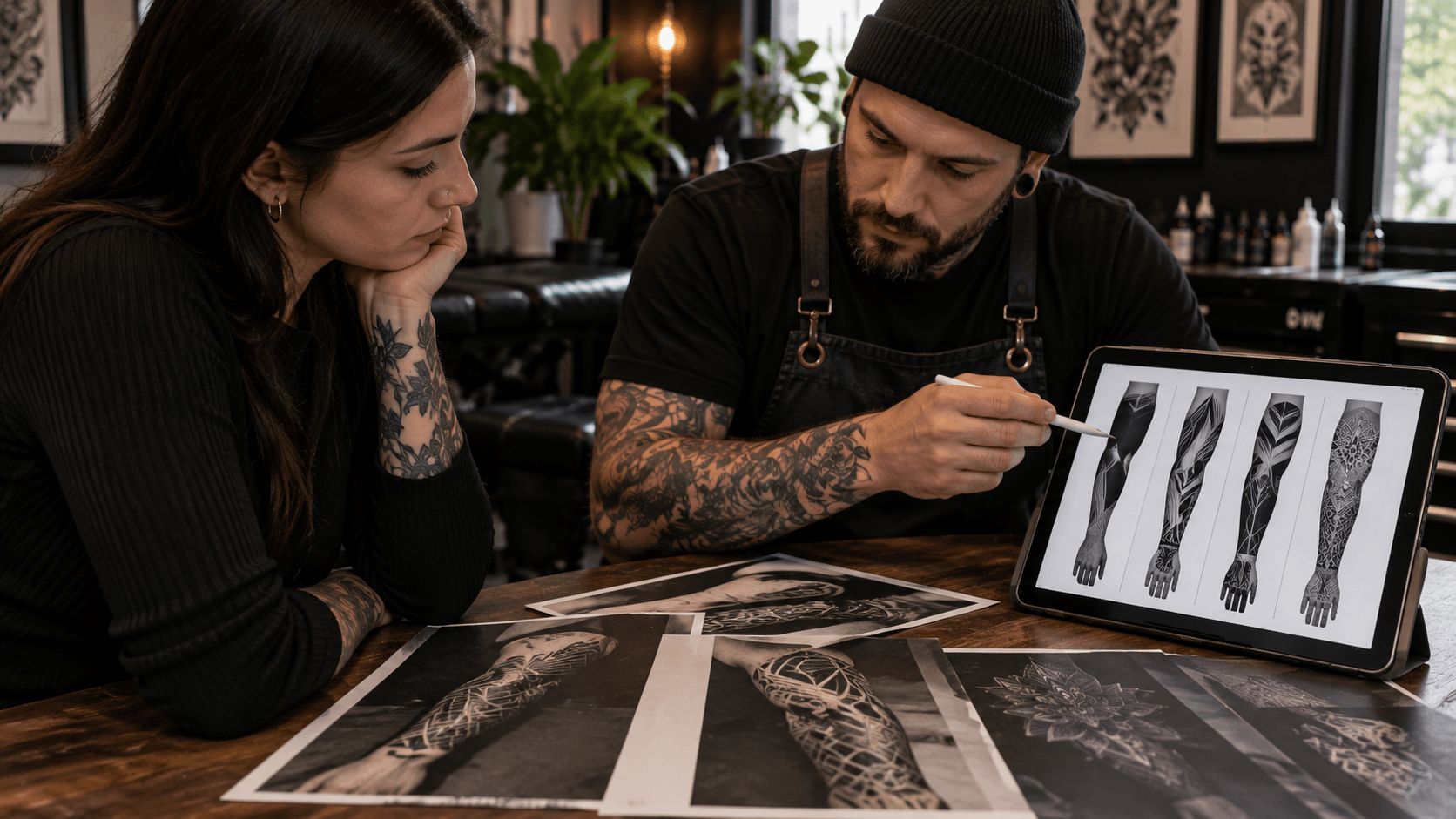
Negative-space blackout tattoos are one of the boldest body-art directions gaining attention in 2026. Instead of covering an entire section of skin with uninterrupted black ink, modern blackout work increasingly uses uninked skin as part of the design. Geometric cutouts, botanical silhouettes, stripes, mandalas, flowing curves, and abstract openings can break up large black areas and create a more sculptural appearance.
This evolution gives blackout tattooing a different visual identity. The black ink becomes the background while the untouched skin becomes the artwork. When planned carefully, the effect can emphasize the shape of the arm, leg, shoulder, or torso and turn a large dark tattoo into a composition built around contrast and movement.
Current 2026 trend coverage describes blackout tattooing as moving beyond simple solid coverage toward more sophisticated geometric and organic negative-space designs. Temporalis highlights geometric blackout as a rapidly expanding direction, while Origin Tattoo London notes the growing use of cutouts, negative-space mandalas, and layered textures.
What Is a Negative-Space Blackout Tattoo?
A traditional blackout tattoo uses dense black pigment to saturate a large area of skin. A negative-space blackout tattoo uses that same strong black foundation but intentionally leaves selected areas uninked.
Those open areas may form:
- Geometric lines and shapes
- Botanical silhouettes
- Mandala-inspired patterns
- Abstract waves and curves
- Architectural or symmetrical cutouts
- Skin-tone bands and borders
The contrast between solid black and natural skin creates the design. This makes spacing and placement extremely important because the uninked sections need to remain readable even when the tattoo wraps around the body.
Why This Blackout Style Is Trending in 2026
Heavy blackwork has been building momentum for several years, but the 2026 version is becoming more design-driven. Instead of treating blackout only as a way to hide an old tattoo, artists are using it as a standalone style.
One reason for the shift is visual impact. A large black field immediately creates a strong silhouette, while carefully planned negative space gives the eye somewhere to rest. This balance makes the tattoo feel intentional rather than simply dark.
Current trend reporting also points to a broader movement toward tattoos that work with anatomy. Large black shapes can follow muscle groups, shoulder curves, forearm lines, or leg contours in ways that make the body itself part of the composition.
Popular Negative-Space Blackout Designs
Geometric Cutouts
Triangles, circles, hexagons, parallel lines, and repeating patterns are especially effective because crisp skin-tone shapes stand out dramatically against black ink.
Artists may use a series of narrow geometric openings to create movement across the forearm or build a larger symmetrical pattern across the upper arm and shoulder.
Botanical Negative Space
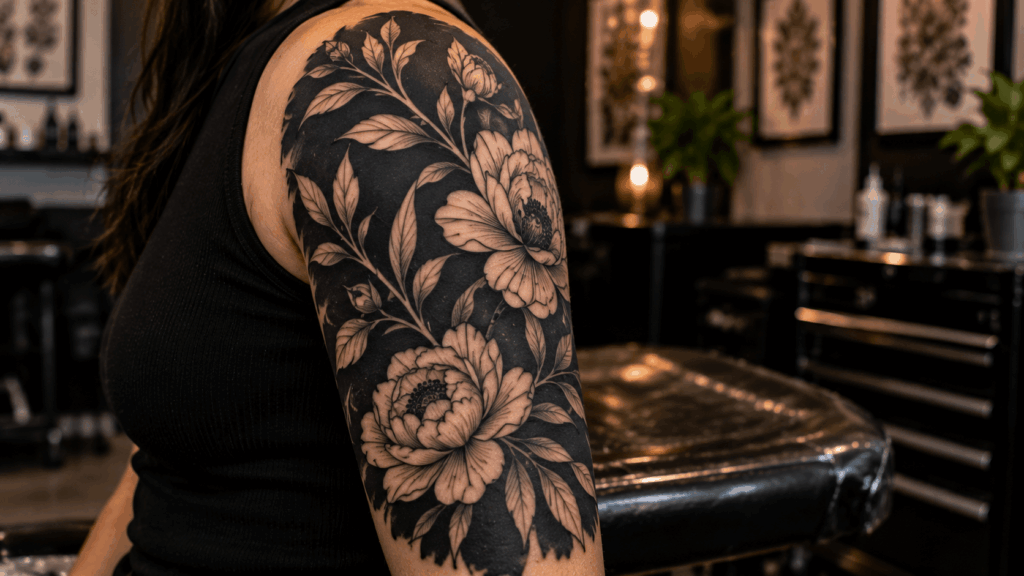
Flowers, leaves, branches, and vines can be left as uninked silhouettes inside a blackout field. The organic shapes soften the visual weight of the black area and create a balance between bold coverage and natural imagery.
Abstract Flow
Some contemporary blackout pieces use curved openings that resemble smoke, liquid, wind, or brushstrokes. These designs can wrap around muscles and joints more naturally than rigid straight lines.
Mandala and Ornamental Cutouts
Mandala-inspired geometry can be created by leaving carefully spaced skin sections inside heavy blackwork. These designs require precision because symmetry becomes highly visible against a saturated background.
Blackout Tattoos as Cover-Up Work
Blackout tattooing can also be considered for difficult cover-up projects because dense black ink can conceal older, darker designs more effectively than lighter tattoo styles.
However, blackout is a major commitment. It does not simply remove the visual presence of the previous tattoo; it replaces it with a much larger and darker area of ink. That makes consultation particularly important.
If you are considering changing an older tattoo, review Painless Ric’s existing content about tattoo transformation and long-term planning before committing to a large blackout area. Our Tattoo Aging Guide also explains how tattoo appearance can change with time, skin changes, and sun exposure.
Placement Matters More With Heavy Blackwork
Negative-space blackout tattoos are often large enough that placement becomes part of the design itself.
Forearm
The forearm provides a long surface that works well for bands, geometric openings, curved black fields, and transitions toward the wrist.
Upper Arm and Shoulder
The rounded shoulder can support radial patterns and large negative-space shapes that continue down into a half sleeve.
Leg and Calf
The calf and thigh provide space for longer vertical compositions and wider solid-black areas without forcing every detail into a small surface.
Chest and Back
Larger body areas allow artists to create broad asymmetrical or symmetrical blackout designs, but the scale also means more planning, tattooing time, and healing considerations.
How Artists Plan Negative Space
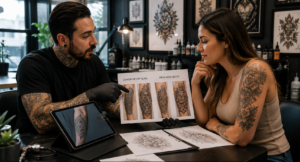
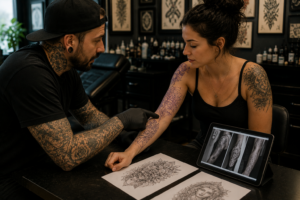
A successful negative-space tattoo needs to be designed for the body rather than copied directly from a flat image. Artists may map major muscles, joints, and natural body lines before deciding where black areas and open skin should meet.
The width of the uninked sections matters. If openings are too narrow, they may lose clarity as the tattoo settles and skin naturally changes. Wider negative-space areas can provide stronger long-term contrast.
Artists may also use stencils, body mapping, and freehand drawing to adjust patterns before tattooing. This is especially important when the design wraps around an arm or leg, where a perfectly straight shape on paper may appear distorted once it follows three-dimensional anatomy.
What to Know About Healing
Large blackout areas involve substantial ink saturation, which means the healing process deserves careful attention. Follow the specific instructions provided by your tattoo artist, keep the area clean, and avoid unnecessary friction or soaking while the tattoo heals.
The Cleveland Clinic explains that tattooing creates controlled skin trauma and emphasizes proper cleaning and aftercare. The American Academy of Dermatology also provides guidance on caring for tattooed skin and protecting healed tattoos from sunlight.
For practical healing information, see Painless Ric’s Tattoo Aftercare Guide.
Tattoo Ink Safety and Studio Hygiene
Blackout work uses significant amounts of pigment, so professional hygiene and ink handling matter. Ask your artist about single-use needles, fresh gloves, workstation barriers, ink preparation, and sanitation procedures.
The U.S. Food and Drug Administration provides information about tattoo inks, contamination concerns, allergic reactions, and other potential complications. Mayo Clinic also recommends choosing an experienced professional who follows appropriate sanitation practices.
Can a Blackout Tattoo Be Changed Later?
This is one of the most important questions to consider before booking. Large saturated black areas significantly limit future design options. Reworking a blackout is not the same as adding a small tattoo beside an existing piece.
Some artists may later incorporate white pigment, additional blackwork, or new negative-space concepts, but results vary and should not be treated as guaranteed. If you think you may want a completely different tattoo in the same area later, discuss that possibility before committing.
Who Might Like This Style?
Negative-space blackout tattoos may appeal to people who prefer bold, graphic body art and are comfortable with a high-commitment design. They can also work for collectors who want a dramatic cover-up or who enjoy architecture, geometry, abstract art, and heavy blackwork.
The style is less suited to someone who wants a subtle tattoo or expects to change the entire area easily in the future.
Final Thoughts
Negative-space blackout tattoos in 2026 show how blackout work is evolving from simple solid coverage into a more deliberate form of graphic body art. By combining saturated black ink with carefully preserved areas of natural skin, artists can create geometric, botanical, ornamental, and abstract compositions with powerful contrast.
The most successful pieces balance visual impact with body flow, spacing, long-term readability, and realistic expectations about healing and future modification. Because blackout is a major commitment, careful consultation and an experienced artist are essential.