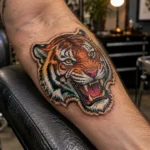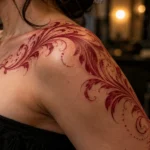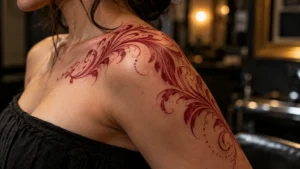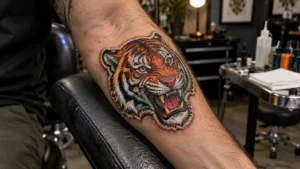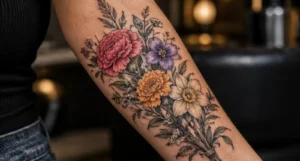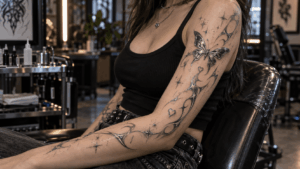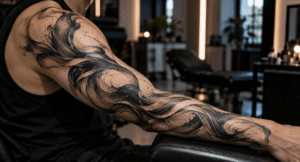
Kintsugi tattoos in 2026 are bringing the visual language of repaired Japanese ceramics into contemporary body art. Delicate fracture lines, porcelain-blue patterns, gold-colored highlights, and carefully arranged negative space make the designs appear as though a cherished object has been broken and thoughtfully restored. Some pieces resemble a small ceramic heart or vase; others spread …
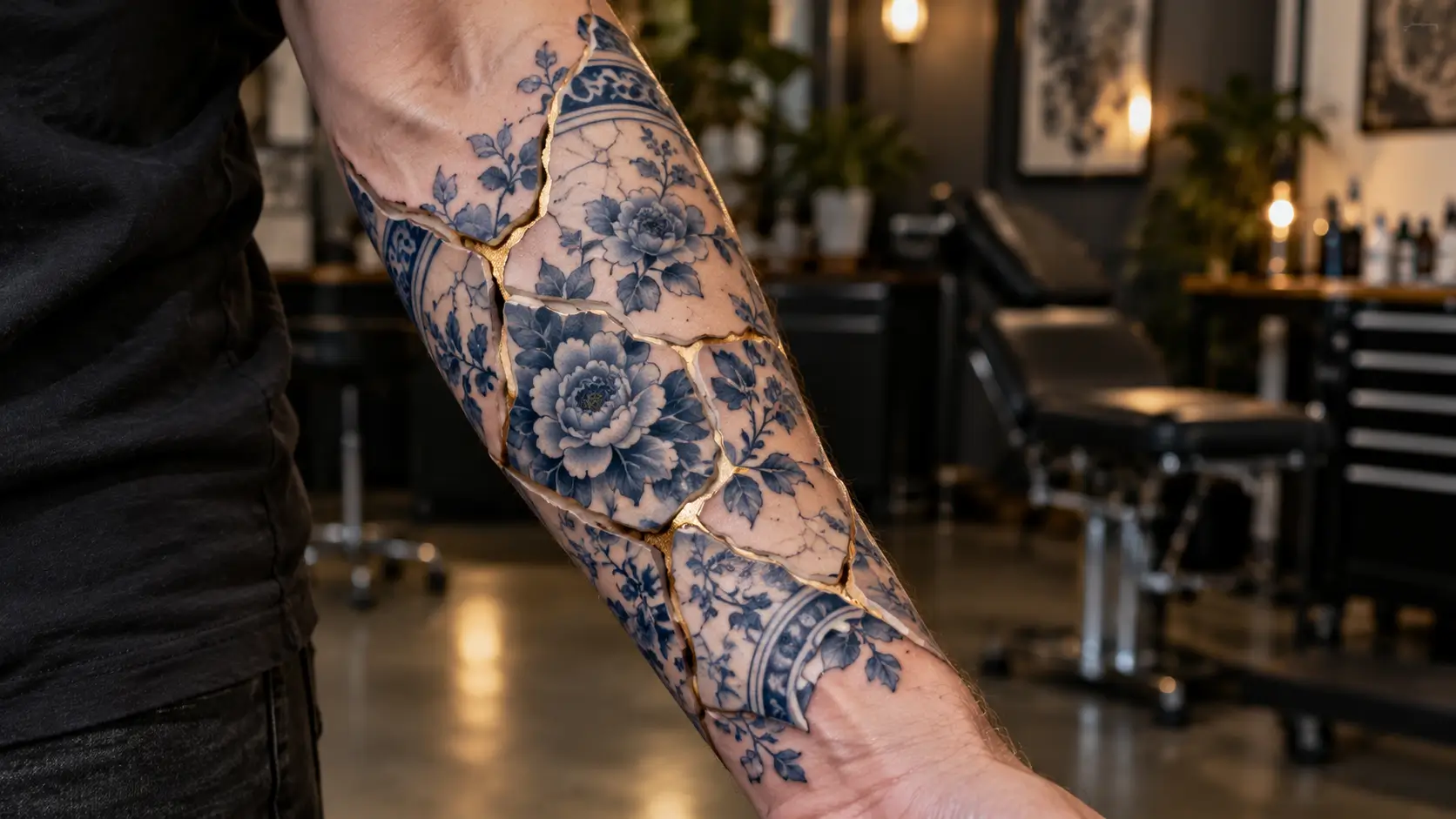
Kintsugi tattoos in 2026 are bringing the visual language of repaired Japanese ceramics into contemporary body art. Delicate fracture lines, porcelain-blue patterns, gold-colored highlights, and carefully arranged negative space make the designs appear as though a cherished object has been broken and thoughtfully restored. Some pieces resemble a small ceramic heart or vase; others spread across an arm like fragments reassembled into a new picture.
The attraction reaches beyond the visual effect. For some wearers, visible mending represents change, resilience, memory, or accepting a complicated personal history. Others simply appreciate porcelain ornament and the striking contrast between cobalt blue, white, black, and warm golden tones. Either approach can inspire a distinctive custom tattoo when the cultural source is understood and the finished composition is designed for skin.
The idea has received fresh attention this year. An April 2026 feature in My Modern Met explored porcelain-inspired tattoo artist Antonio Sangre Blue’s combination of decorative ceramics and visible repair. Rather than presenting the look as a brand-new tattooing invention, it is better understood as a contemporary interpretation of an older craft tradition.
What Is Kintsugi?
Kintsugi is a Japanese method of repairing broken pottery, traditionally involving lacquer and a gold-colored finish that makes the seams visible. The Smithsonian’s explanation of historic repaired ceramics describes how this treatment highlights an object’s history instead of disguising all evidence of damage. It is a specific material practice with a cultural history, not simply a generic phrase for self-improvement.
A tattoo inspired by kintsugi translates those visual features into illustration. The artist might draw a ceramic bowl with wandering seams, create porcelain fragments along a forearm, or use branching gold-colored lines to separate ornamental sections. The tattoo does not perform a physical repair, and the design should not be mistaken for a treatment for scars.
For a closer look at the traditional materials and craftsmanship, the Smithsonian Folklife account of a kintsugi workshop describes how artisans work with urushi lacquer and gold powder. Those materials belong to ceramic conservation; they are not substances to inject into tattooed skin.
Why the Look Is Attracting Interest in 2026
The appeal comes from combining several established interests: detailed illustrative tattoos, meaningful symbolism, antique-inspired pattern, and strong placement-specific composition. Contemporary examples range from little porcelain objects to elaborate designs spread across the body. A 2026 profile of porcelain-inspired tattoo art illustrates how much variety an artist can create with a relatively limited palette.
Unlike a conventional geometric tattoo, a repaired-ceramic design can look deliberately irregular. No two crack paths need to be identical. An artist can use that irregularity to frame flowers, a bird, a treasured object, or a symbolic heart without forcing every element into strict symmetry.
Popular Kintsugi Tattoo Design Ideas
Blue-and-White Porcelain Florals
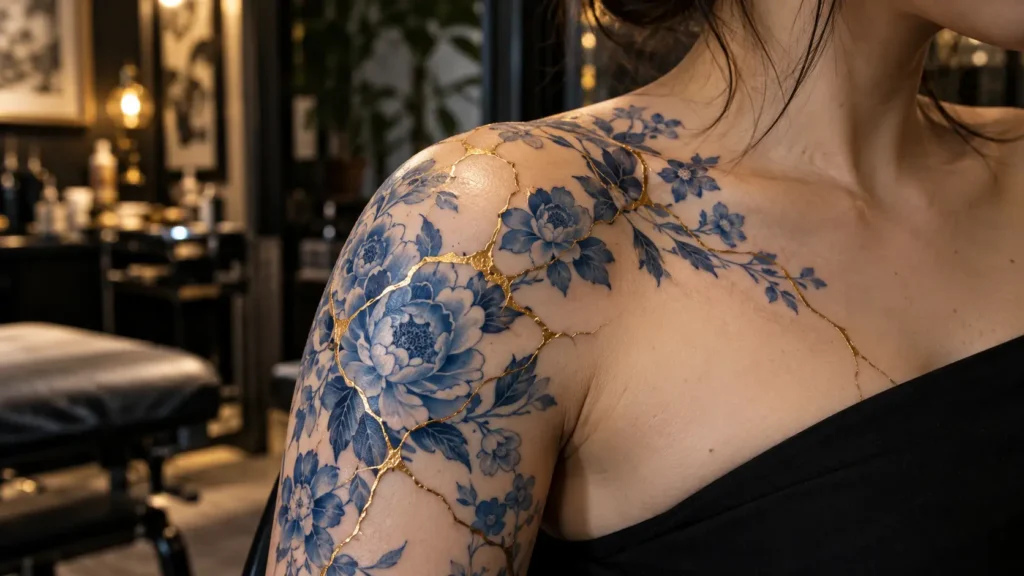
Cobalt-blue blossoms, leaves, vines, and ceramic ornament create a recognizable porcelain effect. The design can be broken into separate illustrated shards joined by warm-colored seams. Blue and white give the piece visual structure, while the gold-toned accents draw attention to the repaired lines rather than overwhelming the flowers.
Repaired Ceramic Hearts
A small heart depicted as cracked ceramic provides a compact focal point. Gold-colored lines can cross the heart, with shading around its edges suggesting a glazed surface. This works as a stand-alone design on the upper arm or forearm, although small pieces need sufficiently wide lines to keep the seams readable after healing.
Birds and Botanical Objects
A crane, koi-inspired ceramic illustration, fox, butterfly, or vase can be constructed from porcelain-like segments. The point is not to add cracks at random but to use them as a meaningful part of the composition. If a design borrows from a specific cultural tradition, discuss the symbols and their origins with the artist before combining them.
Minimal Fracture-Line Tattoos
Not every piece needs a full object. A handful of branching lines can suggest the repaired-ceramic concept on a shoulder or arm. For this minimal approach, the artist should first consider whether the lines will look intentional without the contextual blue ceramic pattern. A short explanation may be part of the tattoo’s personal meaning, but the drawing should also work as a visual composition.
How Tattoo Artists Make a Gold Effect
Gold-looking tattoo lines are an optical effect, not actual metallic seams in the skin. Artists typically build the appearance through approved-for-use studio ink selections, warm yellow, ochre, orange or brown tones, white-looking highlights, and carefully placed shadows. A reflective-looking line in a photograph should not be understood as real gold, a metallic coating, or a guarantee that a healed tattoo will shine.
Color choices deserve special attention. Yellow highlights can be delicate against some skin tones, while darker outlines may be needed to keep the fracture pattern readable. A professional should explain how a palette is likely to appear after healing, including the limitations of lighter pigments.
For background on pigments and carriers, Painless Ric’s Tattoo Ink Ingredients Guide offers a starting point. The FDA tattoo fact sheet is also useful for understanding why color selection and ink safety should be discussed before a session.
Choosing the Right Placement
Forearm and Upper Arm
These areas provide enough room for porcelain fragments, a heart, or a vase without compressing every line. A long vertical composition can run toward the wrist, while the outer upper arm accommodates larger circular ceramic motifs. Designs that cross a joint should be evaluated with the arm both straight and bent.
Shoulder and Back
A shoulder piece can follow the rounded surface of the deltoid. A back design allows more elaborate shard arrangements, connecting botanicals and larger decorative motifs. The extra space lets an artist vary line thickness and preserve readable negative space.
Wrist and Ankle
Small placements can work for simplified fragments or a single repaired heart. They are less suitable for highly intricate ceramic borders because frequent movement and limited space can make fine features difficult to preserve. Ask the artist to show the stencil at actual size before approving it.
Kintsugi Tattoos and Existing Scars
Some people are drawn to repair imagery because they have experienced change or injury. However, a design featuring fracture lines does not mean it should be tattooed directly over a scar. Scar tissue differs from surrounding skin, and suitability depends on healing, location, texture and individual medical factors.
Do not tattoo an unhealed scar or use a design to conceal a skin change that has not been evaluated. People considering tattooing near surgical or traumatic scars should seek guidance from a qualified medical professional and an experienced artist. There is no need to place ink on a scar to express a personal story about repair.
How Will Fine Gold-Looking Lines Age?
All tattoos change over time. Narrow lines can soften, light color can lose contrast, and designs with densely packed decoration may become less distinct. Good sizing matters just as much as color. A slightly larger fragment with open spacing may remain more legible than a miniature piece filled with tiny cracks.
Painless Ric’s Tattoo Aging Guide discusses placement and long-term changes. The American Academy of Dermatology recommends protecting healed tattoos from ultraviolet exposure, since sun can contribute to color fading.
Planning an Original Design
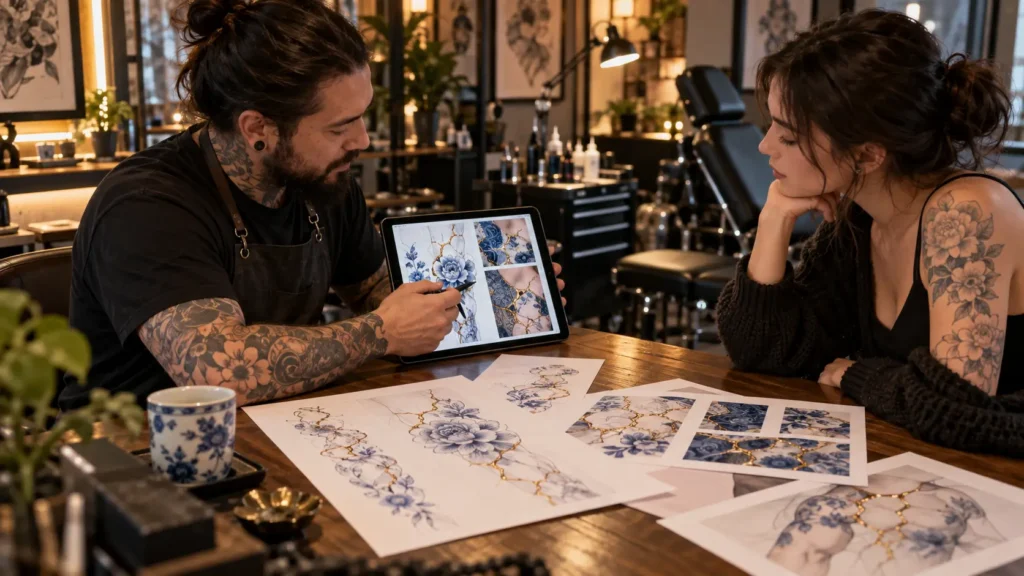
Bring photographs of real repaired pottery and a few examples of tattoo compositions you like. Tell the artist whether the priority is Japanese ceramics, an abstract repair pattern, a treasured object, or a particular personal message. Instead of copying an existing artist’s signature porcelain work, agree on an original layout that respects the craft inspiration and fits your body.
A consultation can also include a comparison with Painless Ric’s Microrealism Tattoos Guide. Microrealism and kintsugi-style illustration may both use small details, but the latter depends heavily on clear seams and ornamental structure.
Aftercare and Safety Considerations
Follow the studio’s instructions for washing, drying, protecting and moisturizing the new tattoo. Avoid picking peeling skin, soaking a fresh tattoo or exposing it unnecessarily to friction. Painless Ric’s Tattoo Aftercare Guide provides a general overview of the process.
The FDA’s tattoo-safety guidance explains that inks can be contaminated even when their packaging appears intact. If redness spreads, pain worsens, pus develops or fever occurs, seek medical advice promptly rather than assuming the reaction is routine healing.
Final Thoughts
Kintsugi tattoos in 2026 bring a distinctive combination of decorative ceramics, deliberate fracture lines and personal interpretation into body art. They work best when the artist understands the original Japanese practice, uses ordinary tattoo pigments to create the illusion of a gold-colored repair, and plans enough size and contrast for the design to remain recognizable after healing.
Whether the finished piece is a single heart, a porcelain flower or a larger arrangement of blue-and-white fragments, the strongest version is an original design created for the wearer rather than a direct copy of somebody else’s tattoo.