
Red ink tattoos in 2026 are attracting attention for their simple but immediately recognizable color choice. Instead of outlining a design in conventional black ink, artists may use crimson, cherry red, burgundy, or muted brick red to draw flowers, symbols, miniature illustrations, fine-line patterns, and lettering. Against natural skin, the result can feel delicate, graphic, …
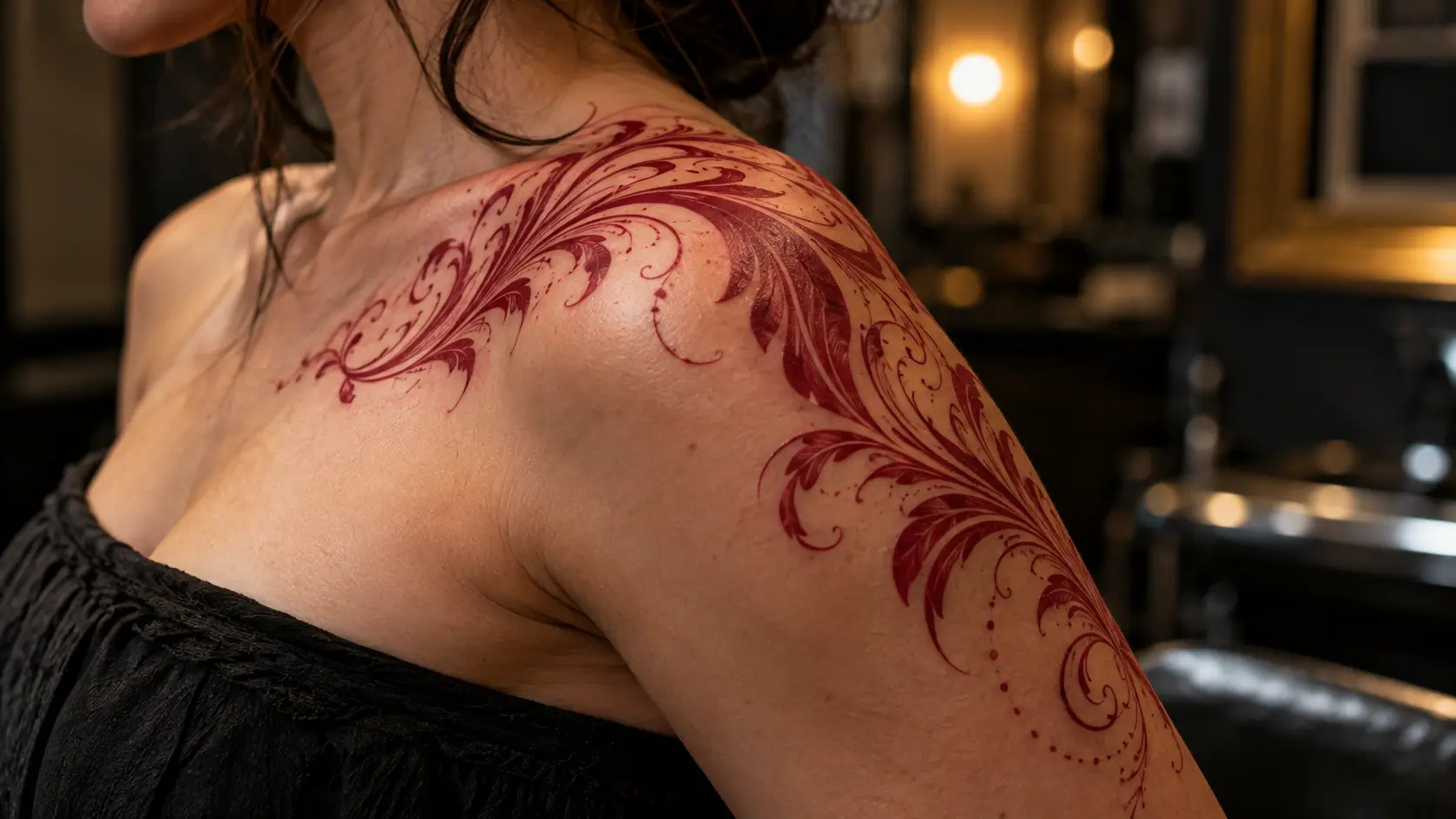
Red ink tattoos in 2026 are attracting attention for their simple but immediately recognizable color choice. Instead of outlining a design in conventional black ink, artists may use crimson, cherry red, burgundy, or muted brick red to draw flowers, symbols, miniature illustrations, fine-line patterns, and lettering. Against natural skin, the result can feel delicate, graphic, or dramatic depending on the hue and scale.
That versatility helps explain the interest in single-color tattooing. A small red star can be playful; an open botanical line drawing can look almost like a red pencil sketch; a larger ornamental piece can create a striking silhouette without using multiple pigments. But red tattoo ink also deserves a safety conversation, because certain pigment reactions are more frequently reported with red than with some other colors.
Current 2026 style roundups discuss red-only designs as part of a larger move toward intentional color palettes. Misfits Tattoo’s 2026 trends guide highlights red ink minimalism, while an August 2026 design roundup shows the range of floral and placement-driven ideas being explored.
What Makes a Red-Only Tattoo Different?
The distinction is the palette rather than the subject. A red-only tattoo may depict a rose, dragon, celestial symbol, animal, abstract line, or brief message, but the drawing is constructed principally in shades of red instead of black. Some artists add tonal changes within the red family; others keep the entire piece to one flat color.
The artist must plan the design for actual skin tone and expected contrast. A bright cherry red may be highly visible on some skin, while a deeper oxblood tone may look more restrained. There is no universal shade that appears identical on everyone. A consultation and healed examples on similar skin tones can help set reasonable expectations.
Why Red Ink Minimalism Feels Current
Modern minimalism is not only about making tattoos smaller. It can also mean reducing a design to a small set of thoughtful choices: one color, a clear silhouette, and generous open skin. Red provides a distinctive accent without demanding a full-color composition.
This approach overlaps with fashion’s interest in small statement details. A design can be noticeable without requiring a large sleeve, and individual pieces can remain separate within a larger tattoo collection. The same subject can look different depending on whether the artist chooses thin scarlet lines, a solid red block, or a deeper crimson gradient.
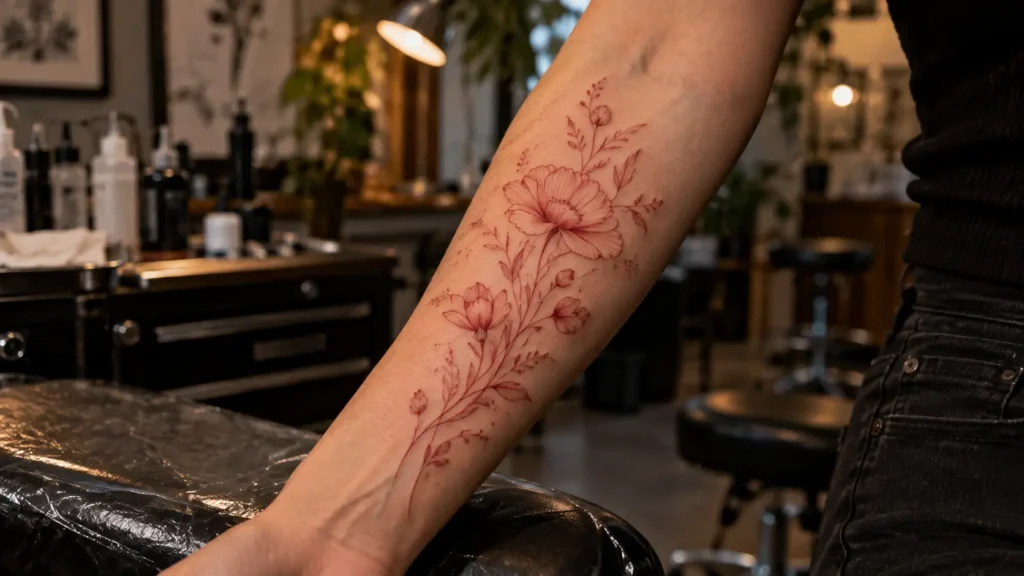
Popular Red Ink Tattoo Ideas for 2026
Fine-Line Red Flowers
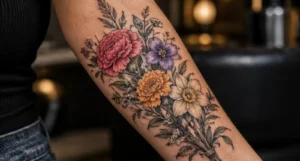
Roses, poppies, peonies, orchids, and abstract blossoms are natural subjects for red ink. The color connects to the flower without requiring realistic leaves or extensive shading. A single stem can follow the forearm; a small blossom can sit near the wrist or shoulder; a sweeping botanical composition can curve around the upper arm.
Fine-line work still requires space. Cramming thin petals together may make them merge as the tattoo settles over time. Larger open petals and carefully separated lines are often more useful than miniature botanical drawings loaded with tiny details.
Small Symbols and Celestial Shapes
A red heart, starburst, crescent, sun, lightning bolt, or constellation-inspired graphic can create a clear focal point. These designs often work best with a restrained silhouette and minimal interior detail. People planning several small tattoos should consider how the symbols will sit next to future pieces.
Red Script and Personal Lettering
Short handwritten words, initials, dates, and meaningful phrases can also work in red. The main challenge is legibility. Thin cursive strokes, especially at small scale, may lose separation as they age, so the artist may recommend stronger lettering or a larger placement.
Painless Ric’s Custom Script Tattoos Guide
Abstract and Ornamental Red Lines
Flowing ribbons, delicate geometry, ornamental frames, and brushstroke-inspired shapes can use a limited red palette to emphasize movement. Curves that follow the shoulder, collarbone, ribs, or forearm often look more considered than a rigid design transferred without placement adjustments.
Red Ink Tattoos on Different Skin Tones
Color appearance is affected by the tattoo pigment, individual skin tone, contrast, and lighting. Reference photographs may be edited or taken immediately after tattooing, when color looks different from healed work. An artist should be able to explain how different shades have behaved in their portfolio rather than promise one precise result.
Ask to see healed tattoos photographed in natural light. If the portfolio contains only fresh red tattoos or heavily filtered images, request additional examples. An experienced artist can also explain when a darker red, a larger design, or carefully placed contrast may improve readability.
Best Placement Options
Forearm and Upper Arm
These placements offer room for botanical lines and ornamental patterns. The forearm can emphasize long vertical stems, while the upper arm allows broader curves and more freedom with scale. Remember that any exposed placement requires long-term sun protection after healing.
Shoulder, Collarbone and Back
A shoulder or collarbone can suit a red flower or curved abstract design. The upper back provides a relatively large area for symmetrical ornament, while a small shoulder tattoo can remain simple without crowding details.
Wrist, Ankle and Fingers
Smaller sites can work for clear symbols, but they may face more movement, frequent washing, and friction. Tiny red script or closely packed dots may need special consideration. Select a design for how it may heal, not only how it looks in a zoomed-in social-media photo.
Are Red Ink Tattoos More Likely to Cause a Reaction?
Red ink warrants particular caution. The American Academy of Dermatology’s skin-reaction guidance explains that allergic reactions can occur in any color, but red is frequently involved. Symptoms may develop soon after tattooing or much later, sometimes affecting one color within a multicolored design.
The medical literature also documents persistent inflammatory responses in red pigment areas. A published series of red-ink reactions describes how diagnosis may require professional medical evaluation. This does not mean that every red tattoo will cause a reaction; it means color-specific risks should not be overlooked.
If you have a history of significant skin allergies, discuss tattooing with a qualified healthcare professional before booking. No studio consultation or informal patch test can guarantee that a future tattoo will be reaction-free, and an allergic response may emerge months or years later.
What Goes Into Red Tattoo Pigment?
There is no single universal red pigment formulation. Tattoo inks may contain different pigments, carriers, and additional ingredients depending on product and manufacturer. Formulas have also changed over time, so historic descriptions of red ink should not automatically be treated as a list of ingredients in a modern bottle.
The FDA tattoo fact sheet discusses pigment oversight and contamination concerns. Painless Ric’s Tattoo Ink Ingredients Guide
Ask your artist which brand and specific ink will be used, whether any recalls apply, and how single-use ink cups and equipment are handled. The FDA’s consumer safety update

How Red Ink Tattoos Age
All tattoos change, but the change is not identical for every person or pigment. Sun exposure, skin changes, aftercare, placement, and the strength of the original design affect how color appears over time. Thin red lines may lose contrast as the edges soften, especially when the initial composition is very small.
Consider choosing enough negative space and a line weight appropriate for the placement. If the design relies on closely spaced details or a very pale pigment, ask how the artist expects those features to behave once healed. Painless Ric’s Tattoo Aging Guide
Healing and Long-Term Aftercare
A new red tattoo should be treated like any other healing tattoo: follow the artist’s cleaning and dressing instructions, avoid picking peeling skin, and reduce unnecessary friction. If you develop worsening pain, spreading redness, pus, fever, or another concerning symptom, seek medical assessment rather than trying to solve it with more products at home.
Once fully healed, protect the tattoo from excessive UV exposure. The AAD’s tattooed-skin care advice: Tattoo Aftercare Guide
Questions to Ask Before Booking
Review healed red-ink examples, discuss realistic size, and ask whether the artist has experience producing clean lines in the exact style you want. Confirm which red shades and ink products are planned, how the studio handles sanitation, and what to do if an unexpected skin reaction occurs after the appointment.
It also helps to compare different approaches. Painless Ric’s Microrealism Tattoos Guide
Final Thoughts
Red ink tattoos in 2026 offer a distinctive way to explore fine-line flowers, small symbols, modern ornament, and personal lettering without a full multicolor palette. A successful design depends on readable scale, an experienced artist, and realistic expectations for healed color.
Because reactions are reported more often with red pigment than some other colors, make pigment and skin safety part of the conversation before booking. A carefully planned tattoo can be visually simple while still deserving the same professional consideration as a large, complex piece.