Fluid tattoos in 2026 are changing the way artists think about movement, placement, and the relationship between a tattoo and the body beneath it. Instead of placing a rigid image on the skin, fluid tattoo designs use sweeping lines, smoke-like shapes, waves, ribbons, brushstroke effects, and organic curves that appear to move with the wearer. …
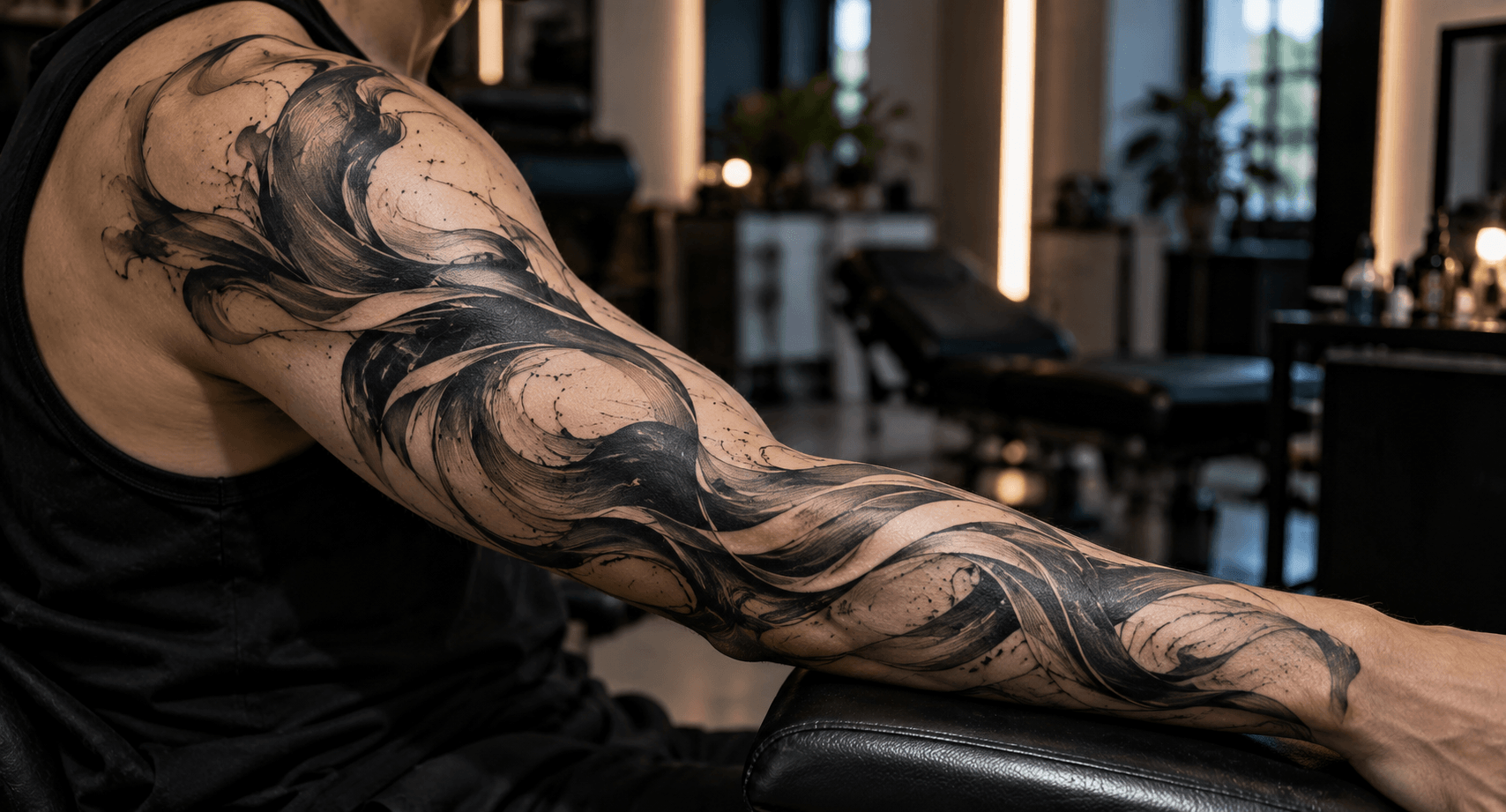
Fluid tattoos in 2026 are changing the way artists think about movement, placement, and the relationship between a tattoo and the body beneath it. Instead of placing a rigid image on the skin, fluid tattoo designs use sweeping lines, smoke-like shapes, waves, ribbons, brushstroke effects, and organic curves that appear to move with the wearer.
This approach can be subtle and minimal or dramatic enough to cover an entire arm, shoulder, back, thigh, or rib area. The defining quality is movement. A fluid tattoo is usually designed to follow anatomy rather than ignore it, allowing the artwork to bend, stretch, and visually shift as the body moves.
Current 2026 trend coverage has identified fluid and organic compositions as an emerging tattoo direction. Origin Tattoo London describes fluid tattoos as designs inspired by water, smoke, and abstract brushstrokes, while Sandbox Tattoos highlights the growing use of motion-based compositions that interact with natural anatomy.
What Are Fluid Tattoos?
Fluid tattoos are body-art compositions that create the impression of motion through curved lines, flowing shadows, repeated shapes, and strategic placement. Unlike geometric designs that often depend on rigid symmetry, fluid tattoos can look spontaneous, soft, or constantly in motion.
Common visual influences include:
- Water currents and waves
- Smoke and mist
- Fabric and ribbons
- Ink or paint brushstrokes
- Wind and swirling air
- Seaweed and aquatic forms
- Abstract organic shapes
The style can be executed in black ink, black and gray, muted color, or more experimental palettes. Some artists use fine lines to create delicate movement, while others use heavy blackwork to create bold areas that sweep across the body.
Why Fluid Tattoos Are Trending in 2026
One reason fluid tattoos are gaining attention is the broader shift toward anatomy-conscious tattoo design. More clients are thinking about how a tattoo looks when the body moves rather than how it looks only in a flat photograph.
A design that follows the shoulder can change slightly when the arm lifts. A rib tattoo can appear to expand with breathing. A composition along the thigh can curve naturally with the leg rather than ending in a hard rectangular boundary.
Temporalis’ 2026 trend coverage points to ribbons, smoke, Japanese-inspired waves, seaweed, and other organic motifs as examples of this movement-focused direction.
Fluid work also fits a larger interest in body-flow tattooing. Instead of choosing a subject first and placement second, many artists start by studying the shape of the body and then build the design around it.
Popular Fluid Tattoo Ideas
Smoke and Mist Designs
Smoke-inspired tattoos use soft, overlapping curves and gradual shading to create a sense of weightlessness. They can wrap around the arm, rise along the spine, or drift across the shoulder.
Black and gray is especially effective for smoke because shading can create depth without forcing the composition into a hard outline.
Wave and Water Tattoos
Water naturally communicates movement, making it an ideal reference for fluid tattooing. Designs can range from recognizable ocean waves to abstract currents that use only sweeping lines and changing thickness.
Water-inspired artwork may also borrow compositional ideas from Japanese tattoo traditions without reproducing culturally specific motifs carelessly. If a design references a recognizable tradition, research its origins and work with an artist who understands the visual language being used.
Ribbon and Fabric-Inspired Tattoos
Ribbons and draped shapes can wrap around an arm or leg and create the illusion that a strip of fabric is moving across the skin. Strategic shading can make the design appear to twist, overlap, or disappear behind itself.
Abstract Brushstroke Tattoos
Some fluid tattoos resemble ink poured across paper or a large painterly brushstroke. They may use broad black areas beside thin trailing lines, creating contrast between heavy and delicate sections.
Best Placements for Fluid Tattoos
Placement is one of the most important parts of a fluid tattoo because the style depends on movement.
Shoulder and Upper Arm
The shoulder provides a rounded surface that works well for circular movement, sweeping curves, and designs that continue into the chest or upper arm.
Forearm
The length of the forearm can support flowing lines that taper toward the wrist or expand toward the elbow. Fluid blackwork can also transition into existing sleeve tattoos.
Spine and Back
Long vertical designs can travel along the spine while larger abstract compositions can extend across the shoulder blades or lower back.
Ribs
The rib area can emphasize breathing and body movement. Flowing designs can follow the natural curve of the torso rather than sitting within a fixed box.
Thigh and Calf
Leg placements offer enough room for long ribbons, waves, abstract flames, smoke, or botanical-inspired shapes.
Placement also affects long-term appearance. Painless Ric’s Tattoo Aging Guide explains how sun exposure, movement, friction, design density, and skin changes can influence tattoos over time.
Fluid Tattoos and Negative Space
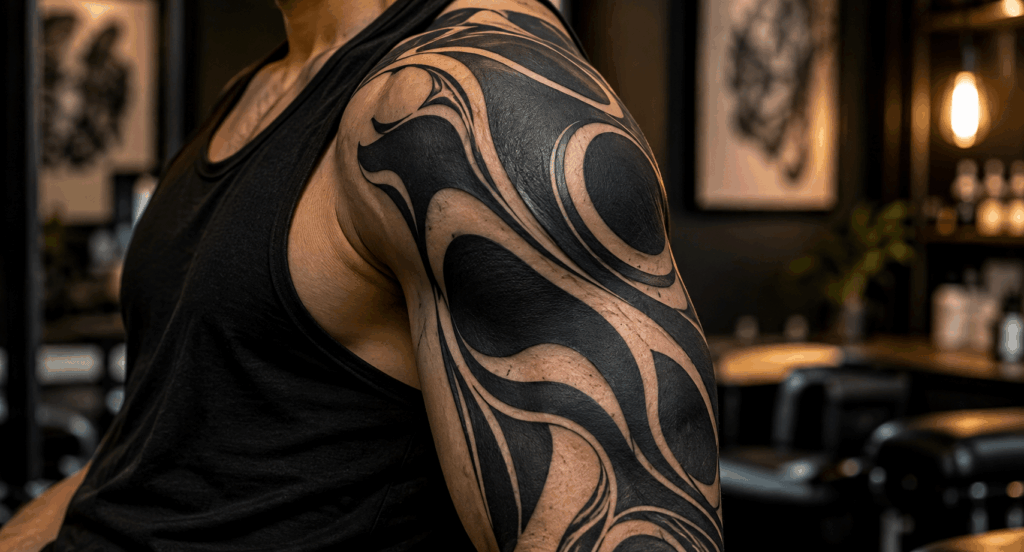
Negative space can make fluid tattooing more dynamic. Instead of filling every section with ink, artists may leave strips of natural skin between black shapes so the composition remains open and readable.
These gaps can create the illusion that lines are crossing, folding, or moving around each other. Wider open areas can also prevent a large composition from feeling visually heavy.
This principle is especially useful when fluid work is combined with blackwork. The contrast between saturated black sections and uninked skin can emphasize movement without requiring highly detailed imagery.
How Artists Plan a Fluid Tattoo
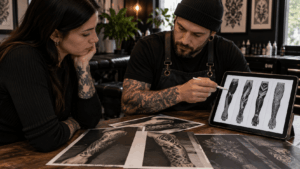
Because anatomy is so important, a fluid tattoo may require more placement planning than a small isolated design. Artists may draw directly on the body, adjust a digital concept to the client’s proportions, or modify a stencil after seeing how the design sits when the person stands naturally.
The artist may consider:
- Muscle direction
- Joint movement
- Existing tattoos
- Natural body curves
- Where the design should taper
- Where negative space should remain
This approach can make every fluid tattoo highly customized because the same design may not sit correctly on two different bodies.
Fluid Tattoos vs. Microrealism
Fluid tattooing and microrealism represent two very different 2026 directions. Microrealism tattoos concentrate detailed imagery into a relatively small space, while fluid tattoos often prioritize composition, movement, and silhouette over tiny realistic detail.
A microrealism tattoo may be judged by the precision of a tiny portrait. A fluid tattoo may succeed because the entire shape looks balanced when seen from several feet away.
Neither approach is inherently better. The right choice depends on whether you are more interested in recognizable imagery or large-scale visual movement.

How Do Fluid Tattoos Age?
Long-term appearance depends on line weight, spacing, pigment saturation, placement, aftercare, and individual skin changes. Very thin lines may soften differently than broader black shapes, while tightly packed details can become less distinct as a tattoo ages.
The American Academy of Dermatology recommends protecting healed tattoos from excessive ultraviolet exposure. Keeping tattooed skin moisturized when dry can also help maintain the overall appearance of the skin.
Aftercare and Tattoo Safety
A fluid tattoo requires the same careful healing process as other professional tattoos. Follow your artist’s instructions, avoid picking or scratching, and protect the area while it heals.
The Cleveland Clinic provides general guidance on tattoo healing, while the U.S. Food and Drug Administration provides information about tattoo inks, contamination, and potential reactions.
Mayo Clinic also recommends choosing a professional studio that follows appropriate hygiene procedures.
For more practical healing information, read Painless Ric’s Tattoo Aftercare Guide.
Choosing a Fluid Tattoo Artist
Look for an artist whose portfolio shows strong large-scale composition rather than only isolated small tattoos. Fluid work requires an understanding of how shapes wrap around the body and how a design changes from different viewing angles.
Healed photographs are especially useful because they show how lines, shading, and large black sections settle into the skin.
During consultation, discuss whether the artwork should feel soft, dramatic, minimal, dark, or painterly. Bring reference images that communicate movement rather than expecting the artist to duplicate another person’s tattoo.
Final Thoughts
Fluid tattoos in 2026 are pushing tattoo design toward movement, anatomy, and custom composition. Smoke, waves, ribbons, brushstrokes, and abstract organic shapes can transform the body into an active part of the artwork rather than simply a surface underneath it.
The strongest fluid designs are planned around the wearer. They consider body contours, negative space, movement, scale, and long-term readability while still leaving room for artistic spontaneity.
For clients who want modern tattoo work that feels less rigid and more alive, fluid tattooing offers one of the most distinctive directions to explore in 2026.