Pet portrait locket tattoos are becoming one of 2026’s most personal tattoo trends. Instead of placing a pet portrait alone on the skin, artists are framing detailed animal portraits inside heart-shaped lockets, oval frames, ornamental borders, vintage jewelry designs, and other decorative forms. The combination gives the tattoo two layers of meaning. The portrait represents …
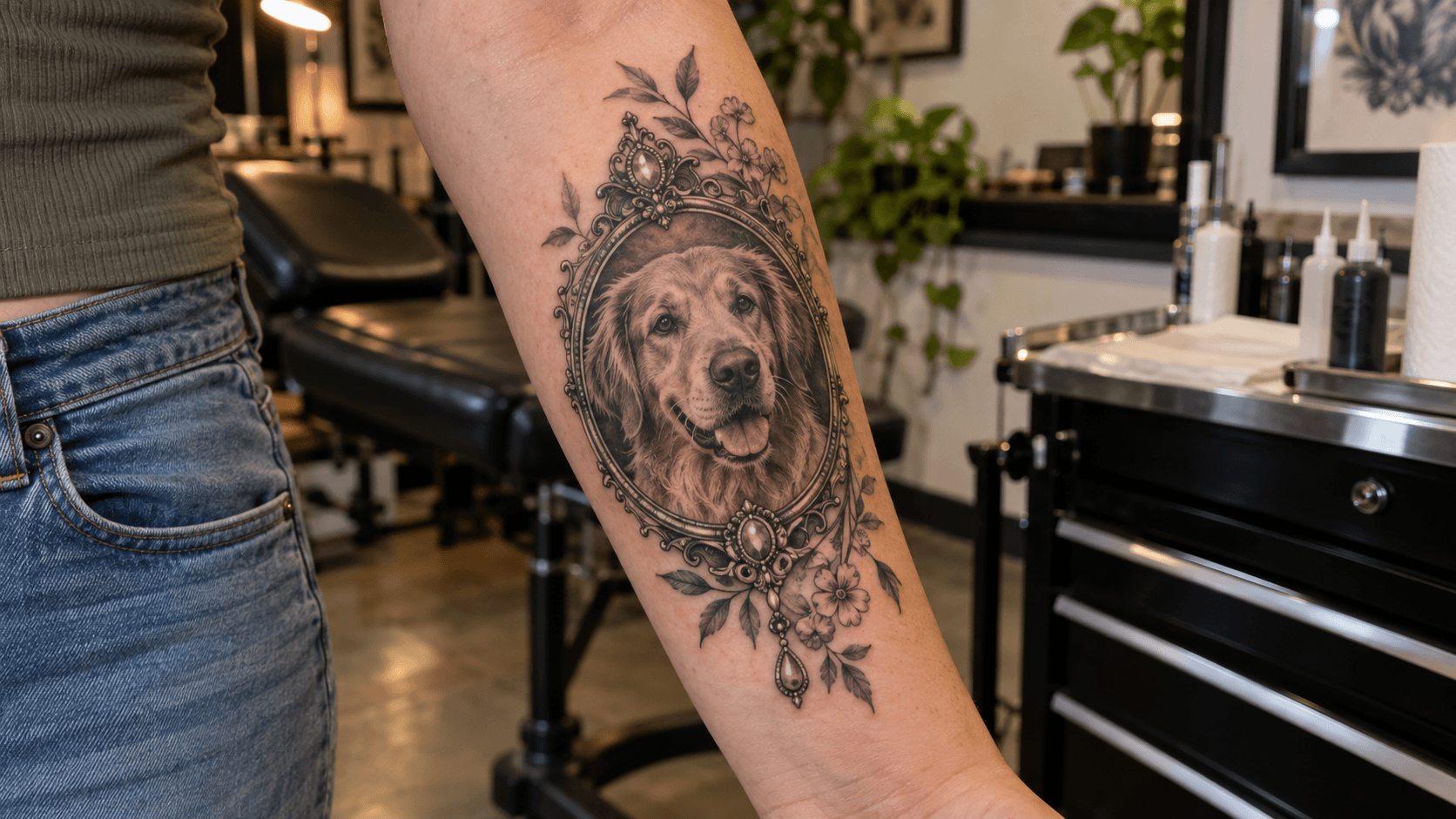
Pet portrait locket tattoos are becoming one of 2026’s most personal tattoo trends. Instead of placing a pet portrait alone on the skin, artists are framing detailed animal portraits inside heart-shaped lockets, oval frames, ornamental borders, vintage jewelry designs, and other decorative forms.
The combination gives the tattoo two layers of meaning. The portrait represents a beloved pet, while the surrounding frame can symbolize memory, protection, family, or something precious enough to preserve. Some designs look like antique jewelry passed through generations. Others use clean modern frames, flowers, initials, ribbons, or tiny symbols connected to the animal.
Current tattoo trend coverage has specifically highlighted pet portraits inside lockets as a major personalized direction for 2026. Allure’s 2026 tattoo trend report points to the growing appeal of customized pet portraits and vintage-inspired framing, while Ink Couture’s 2026 trend coverage also highlights pet locket portraits as one of the year’s most personal designs.
What Is a Pet Portrait Locket Tattoo?
A pet portrait locket tattoo combines a recognizable image of an animal with a decorative frame inspired by traditional lockets or miniature portrait jewelry.
The portrait may depict:
- A dog or cat
- A rabbit or bird
- A horse
- A current companion animal
- A pet remembered through memorial artwork
The surrounding frame might include scrollwork, florals, pearls, chains, ribbons, dates, initials, stars, or decorative metal-inspired details.
Some designs depict an open locket with one side containing the animal portrait and the other containing a flower, date, initial, or meaningful symbol. Others simplify the idea into an oval portrait surrounded by elegant ornamental linework.
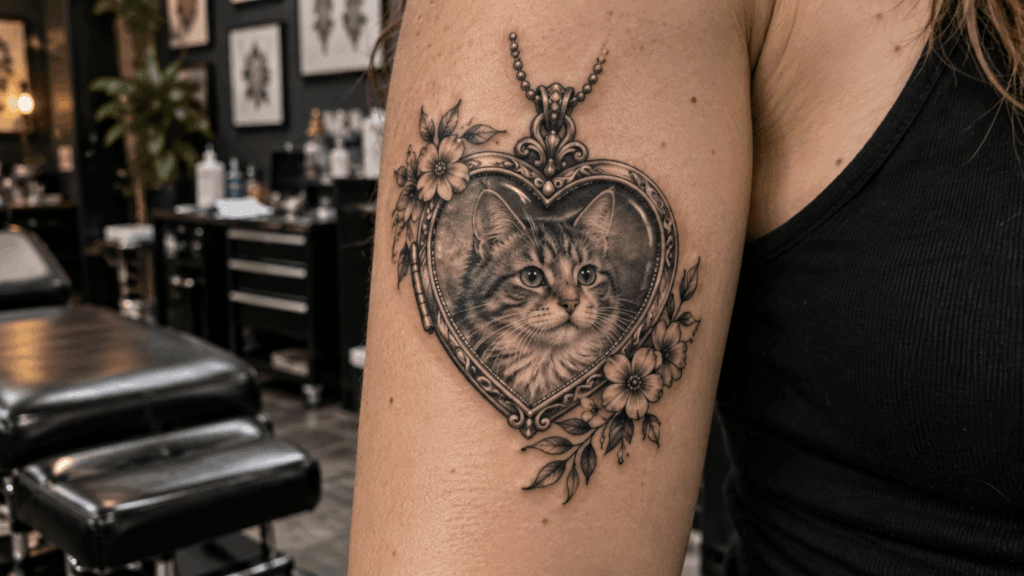
Why Pet Locket Tattoos Are Trending in 2026
Personal storytelling has become one of the strongest themes in contemporary tattooing. Rather than selecting artwork only because a particular style is popular, many collectors want tattoos that document a relationship, memory, place, or part of their identity.
A pet portrait naturally fits that shift. The locket adds another layer because lockets have historically been associated with keeping someone’s image close.
The style also benefits from advances in detailed small-scale tattooing. Artists experienced in microrealism tattoos can create expressive eyes, fur texture, facial markings, and other identifying features within relatively compact compositions.
However, compact does not mean microscopic. A portrait needs enough space for the important details to remain distinguishable after healing and as the tattoo changes over time.
Choosing the Right Pet Photo
The reference photograph is one of the most important parts of a portrait tattoo. A technically excellent artist can only work with the visual information available in the source image.
Look for a photograph where your pet’s face is clearly visible and naturally lit. Sharp images usually provide more useful information about fur direction, eye shape, markings, nose structure, and expression.
More importantly, choose a photograph that feels like your pet. The technically clearest image is not always the most meaningful one.
A photo showing the expression you remember every day may produce a more personal tattoo than a perfectly posed portrait that does not capture the animal’s personality.
Popular Locket Frame Styles
Victorian-Inspired Lockets
Vintage frames with scrollwork, engraved-looking borders, pearls, and floral decoration create an heirloom appearance. These designs can pair especially well with black-and-gray portraits.
Heart-Shaped Lockets
Heart lockets make the emotional meaning immediately recognizable. Artists can keep the border simple or add ribbons, flowers, chains, and ornamental details.
Oval Portrait Frames
Oval frames resemble miniature painted portraits and provide plenty of room for an animal’s face without requiring an elaborate jewelry design.
Floral Lockets
Flowers can represent a birth month, favorite garden, memory, or simply provide a natural transition between the portrait and surrounding skin.
Open Lockets
An open locket allows two visual elements to share one composition. One side may contain the pet portrait while the other features an initial, paw-inspired symbol, flower, landscape, or meaningful date.
Microrealism Works Well for Pet Portraits
Many modern pet locket tattoos use microrealism because the style can capture recognizable features without requiring a very large portrait.
The artist may focus on the eyes, distinctive markings, ears, and facial structure rather than trying to reproduce every strand of fur individually.
Contrast becomes particularly important at smaller scales. Dark features need enough separation from lighter areas so that the face remains recognizable from a normal viewing distance.
For more information about the technique, see Painless Ric’s guide to Microrealism Tattoos in 2026.
Best Placements for Pet Locket Tattoos
Inner Forearm
The forearm provides a relatively flat surface that can accommodate both the portrait and decorative frame. It also keeps meaningful artwork visible to the wearer.
Upper Arm
The upper arm provides additional space for larger frames, flowers, ribbons, and supporting details.
Thigh
The thigh is an excellent option when the portrait needs more size. Larger tattoos allow artists to preserve subtle facial details and add elaborate ornamental framing.
Calf
Vertical locket designs can fit naturally on the calf, especially when a chain, ribbon, or botanical element extends above or below the portrait.
Chest
A small portrait close to the chest can add another layer of symbolism for people who associate the tattoo with remembrance or emotional connection.
Adding Personal Details to the Design
The strongest pet portrait tattoos usually contain details specific to the animal rather than generic decorations.
Possible additions include a favorite flower, collar charm, birth month flower, small landscape, nickname, date, or handwritten word.
Handwriting can be especially meaningful when incorporated carefully. If you want to combine portrait artwork with a signature or handwritten phrase, Painless Ric’s Custom Script Tattoos in 2026 guide explains why letter spacing and scale matter.
How Pet Portrait Tattoos Age
Portrait tattoos need enough space for their important features to remain readable. Extremely tiny eyes, whiskers, fur lines, and decorative frame details may gradually soften as skin naturally changes.
An experienced artist may recommend making the design larger than expected or simplifying secondary details. That extra space can help preserve the expression and silhouette that make the animal recognizable.
Painless Ric’s Tattoo Aging Guide discusses how placement, sun exposure, skin changes, and design density affect tattoo appearance over time.
The American Academy of Dermatology also recommends protecting healed tattoos from ultraviolet exposure, which can contribute to fading.
Pet Portrait Tattoo Aftercare
Detailed portraits require the same proper healing process as other professional tattoos. Follow your artist’s specific instructions rather than relying on a one-size-fits-all routine.
The Cleveland Clinic explains general tattoo-healing practices, including appropriate cleaning and monitoring the skin during recovery.
The U.S. Food and Drug Administration provides additional information about tattoo inks, contamination, allergic reactions, and potential complications.
Mayo Clinic also recommends choosing a reputable professional who follows appropriate hygiene practices.
For more practical healing information, review Painless Ric’s Tattoo Aftercare Guide.
Choosing the Right Artist
Pet portraits require both technical skill and strong observation. Review an artist’s healed portrait work and look closely at whether animals remain recognizable without relying on exaggerated detail.
Also examine the artist’s experience with ornamental framing. The portrait and locket should feel like one composition rather than two unrelated designs placed together.
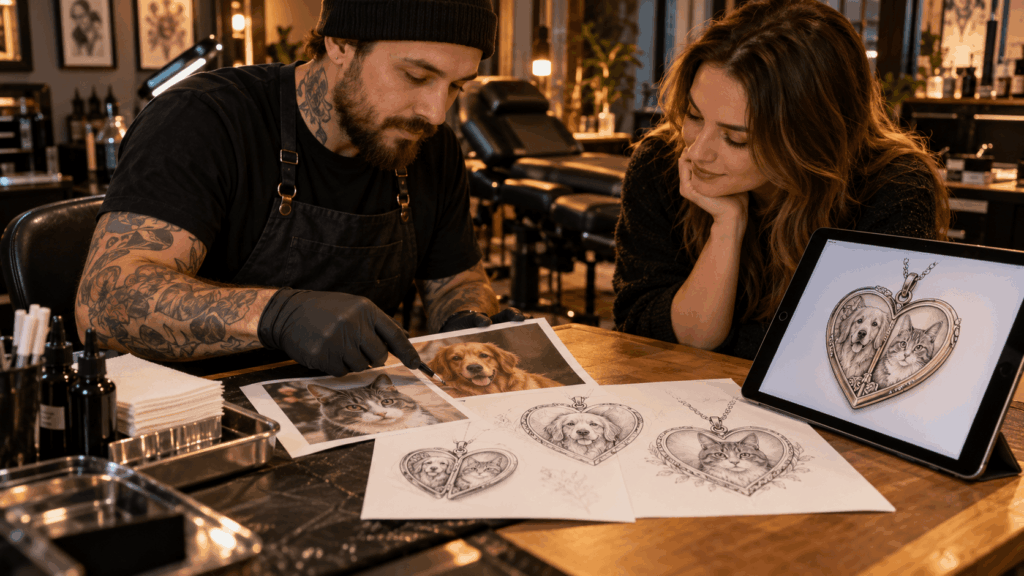
Bring several photographs to the consultation. A good artist can help determine which reference provides the strongest expression, lighting, and angle for tattooing.
Final Thoughts
Pet portrait locket tattoos in 2026 combine microrealism, vintage design, and personal storytelling in a format that feels intimate and highly customizable.
The locket can transform a straightforward portrait into something that resembles a permanent keepsake. Flowers, initials, ribbons, meaningful symbols, and custom frame details can make the composition even more personal.
The most successful design starts with a clear reference photograph, enough space for important facial features, thoughtful placement, and an artist experienced with detailed portrait work. When those elements come together, a pet locket tattoo can become a lasting tribute rather than simply another trend.