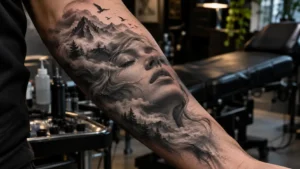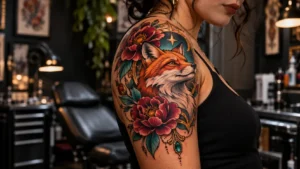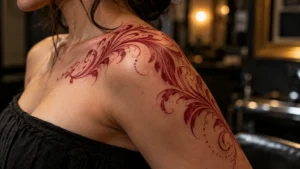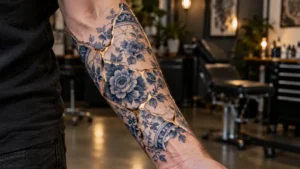
Botanical specimen tattoos in 2026 take inspiration from field journals, scientific illustration, herbarium collections, and detailed studies of plants. Instead of depicting only a decorative flower, these tattoos explore the whole organism: roots, stems, leaf veins, buds, seed pods, and sometimes a cutaway view of a blossom. The result can resemble a page from a …
Botanical specimen tattoos in 2026 take inspiration from field journals, scientific illustration, herbarium collections, and detailed studies of plants. Instead of depicting only a decorative flower, these tattoos explore the whole organism: roots, stems, leaf veins, buds, seed pods, and sometimes a cutaway view of a blossom.
The result can resemble a page from a natural-history book. Some designs are delicate and monochrome, while others combine soft botanical colors with restrained linework. They offer a distinctive option for gardeners, hikers, plant lovers, science enthusiasts, and anyone drawn to nature in its less polished forms.
In its October 2026 tattoo-trend review, Inkjin describes growing interest in scientific-style botanicals, cross-sections, roots, and plants shown through different stages of growth. The wider artistic tradition is documented by the Natural History Museum’s botanical illustration collection, where scientific accuracy and artistic expression meet.
What Is a Botanical Specimen Tattoo?
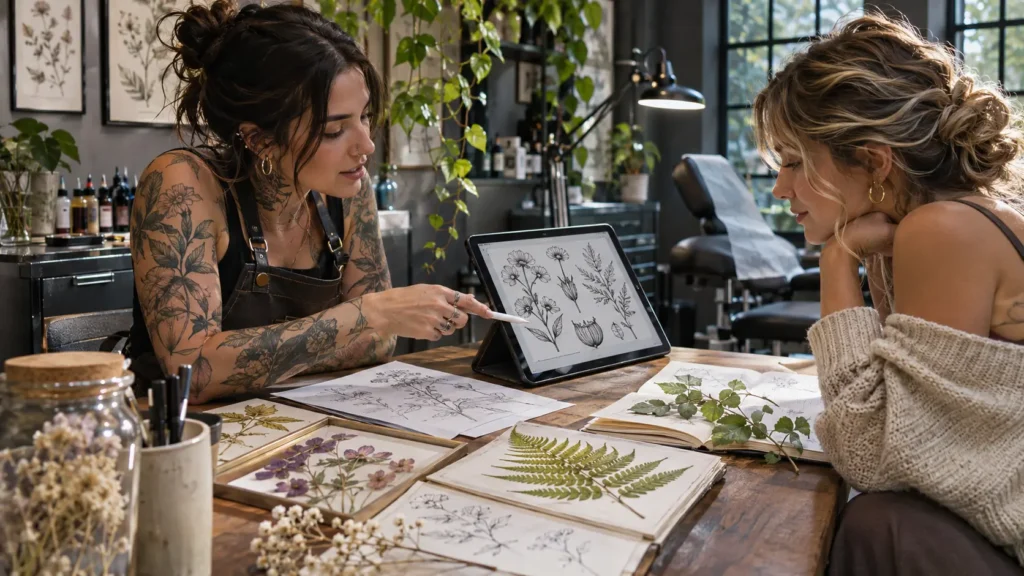
A specimen tattoo presents a plant as something to observe closely rather than as a generic decorative shape. It may show the entire structure of a fern, a flower dissected into recognizable parts, or a seedling above its branching root system. Some compositions resemble pressed specimens mounted on archival paper; others look like the careful pencil drawings found in field notebooks.
The word specimen describes the visual approach, not a requirement to copy a specific scientific plate. Artists can make original arrangements from photographs or several references while keeping the defining features of a species recognizable. Accuracy matters most when a client wants the tattoo to portray a particular plant.
Why Scientific Botanicals Are Getting Attention
Floral tattooing has never disappeared, but recent coverage suggests that clients are asking for more detailed and individualized nature imagery. A simple rose can be beautiful, yet a leaf cross-section or winding root network may feel more personal to someone interested in ecosystems, environmental work, gardening, or a remembered landscape.
There is also renewed attention to botanical art outside tattoo culture. In September 2026, Royal Botanic Gardens, Kew announced an exhibition centered on plant evolution and contemporary botanical illustration. That is not a measure of tattoo demand, but it shows the broader cultural appeal of scientific plant images.
The trend differs from birth-month bouquets. Those designs often combine flowers to symbolize family members. Specimen tattoos typically focus on form, anatomy, observation, and the individuality of one plant or ecosystem.
Popular Botanical Specimen Tattoo Ideas
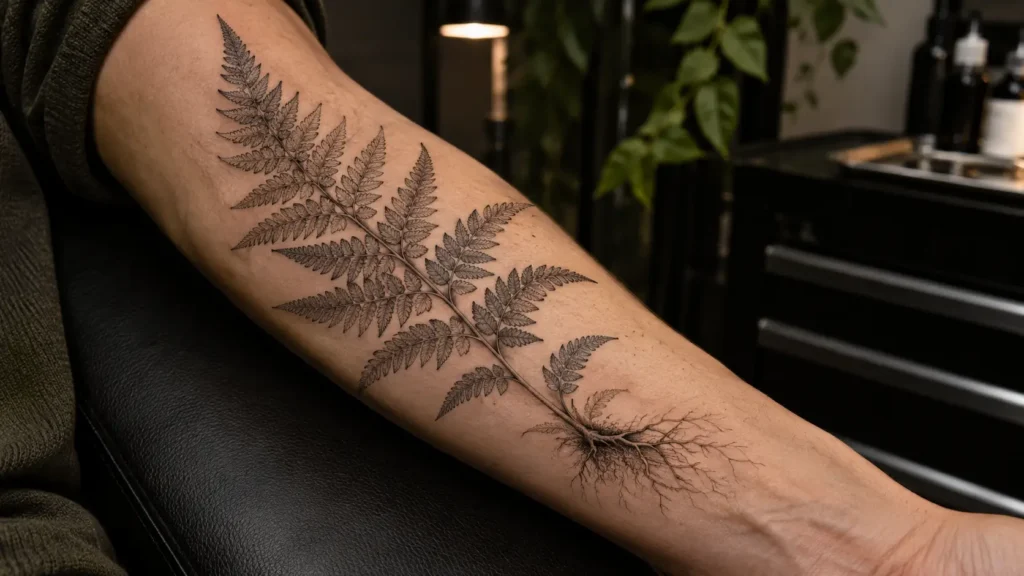
Ferns With Visible Roots
Fern fronds make attractive vertical tattoos because their leaflets repeat rhythmically along a curved central stem. Below the fronds, fine roots or a stylized underground section can create a surprisingly detailed composition. The artist may simplify the smallest leaflets to avoid crowding them together.
Flower Cross-Sections
A flower dissected into petals, stamens, and an ovary creates a scientific rather than purely decorative mood. The design can include one complete bloom alongside a carefully separated structural detail. Choose a plant with a distinctive center or petal arrangement so the drawing remains interesting even without text labels.
Seeds, Pods, and Germination
A small sequence can show a seed, a developing root, the first leaves, and an established plant. This makes a strong narrative about change, patience, or a new chapter. Keeping the stages clearly separated is more important than copying every microscopic feature.
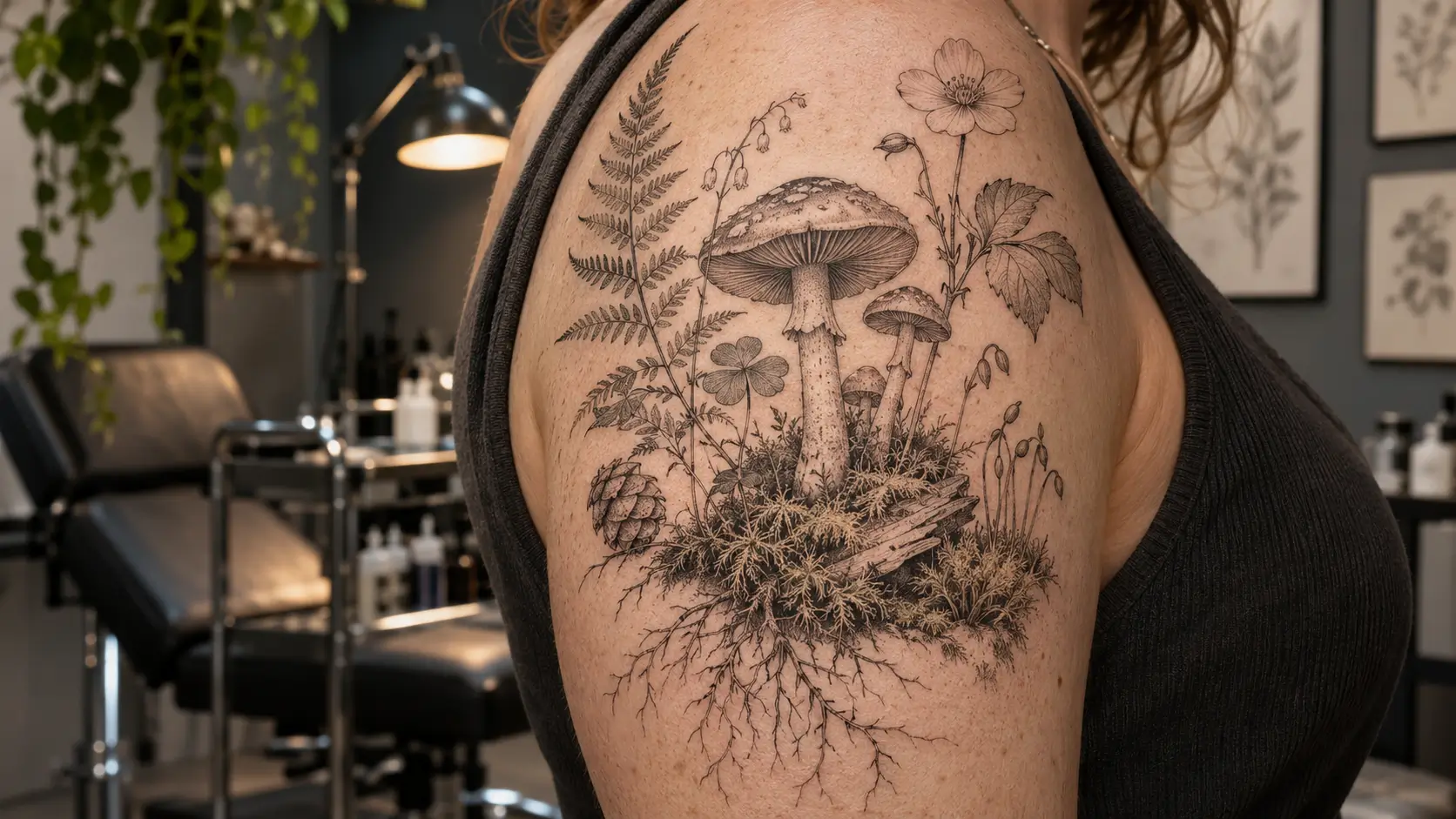
Mushrooms, Moss, and Woodland Studies
Fungal forms and moss textures can be shown beside a plant specimen to suggest a forest-floor environment. However, mushrooms are fungi rather than plants; a scientifically minded design should acknowledge that difference. Cap texture, gills, and delicate woodland details make this a visually rich subject for a larger tattoo.
Using Real Plant References
Start by identifying the species you want. A common name may refer to several different plants, so a scientific name or reliable photograph can help the artist understand which leaf or flower structure matters. If the tattoo represents a specific tree from your childhood, photograph its leaves, bark, seeds, and overall silhouette rather than relying only on a generic internet image.
Collections such as the Natural History Museum’s illustration archive show how botanical artists balance accurate shapes with readable composition. You can also browse resources from Royal Botanic Gardens, Kew for botanical context. Be mindful of image rights when choosing a modern illustration as a reference.
Fine Line, Dotwork, and Color Approaches
Fine linework suits leaves, narrow stems, and delicate root structures. Dotwork can show uneven surfaces or gradual shadow without creating heavy, dark areas. Black-and-gray realism works for textured bark, curled dried leaves, or specimens meant to look three-dimensional.
A muted color palette may include sage green, pale olive, warm gray, rust, and soft yellow. Color is optional, not an automatic improvement. A single consistent ink treatment often makes several related specimens look more cohesive.
To compare delicate line styles and their limitations, see Painless Ric’s fine line tattoos in 2026. The article explains why tiny details need careful sizing and appropriate spacing.
How Does This Differ From Engraving or Floral Tattoos?
A botanical specimen tattoo is defined chiefly by subject and composition. Engraving work is defined by the hatching or print-like method used to create texture. A specimen can use engraving-style shading, but it can also resemble a clean modern scientific diagram.
Painless Ric’s engraving tattoo guide covers antique line-based imagery. Its birth flower bouquet article focuses on emotional arrangements that combine several blooms. These are related inspirations rather than the same topic.
Best Placements for Specimen Designs
Inner forearm: A fern or single plant can run vertically along the arm, leaving space for roots near the wrist and leaves nearer the elbow. It is suitable for a design meant to be seen often.
Upper arm: This area can accommodate a larger flower cross-section or a small grouping of plant studies without forcing the details into a narrow space.
Calf: Tall grasses, wildflowers, and ferns work naturally with the calf’s shape. A narrow specimen may also be easier to keep visually separate from future tattoos.
Thigh or back: Larger areas suit multiple stages of germination, mixed fungi-and-plant studies, or a detailed botanical collection with considerable negative space.
The best location depends on the actual composition, not just a list of fashionable placements. Ask your artist to show the stencil at real size and from more than one viewing angle.
Should You Include Scientific Labels?
Small labels and specimen numbers can strengthen the field-guide atmosphere, but text requires more room than people expect. The tiniest letters may lose readability over time. Consider one short species name, a simple date, or no lettering at all. The plant drawing should remain understandable without a caption.
If you want a meaningful handwritten note, review the site’s custom script tattoo guide before deciding on letter size and placement. Check spelling and species names carefully before the stencil is applied.
Designing for Long-Term Readability
Roots and leaf veins may look incredibly fine in a reference photograph, but skin does not retain every microscopic line exactly as drawn. An artist may enlarge the main plant, simplify overlapping roots, separate the leaves, and avoid packing shadow into every open space. These adjustments protect the overall character of the illustration.
Photographs of healed work are more useful than fresh images alone when selecting an artist. Ask whether the proposed design has enough contrast and whether any fragile areas should be simplified. Learn more in Painless Ric’s tattoo aging guide.
Tattoo Safety and Aftercare
The scientific appearance of an image does not make the tattooing procedure different from other permanent tattoos. It still involves repeated needle punctures and possible risks. The FDA’s tattoo safety fact sheet addresses ink contamination, infections, and adverse reactions. Choose a professional studio with appropriate hygiene and single-use supplies.
Follow the artist’s bandage, washing, and moisturizing instructions. Avoid picking at healing skin and protect the new tattoo from unnecessary friction or soaking. For healed tattoos, the American Academy of Dermatology recommends sun protection and care for dry skin. Painless Ric’s aftercare guide offers more practical details.
Choosing an Artist for Botanical Accuracy
Look for a portfolio showing believable plant forms, clear linework, and thoughtful body placement. Ask how the artist uses references and whether they are comfortable drawing unusual leaves, roots, or seed structures. A beautiful tattoo can be stylized without pretending to be a scientifically exact illustration.
For a memorable custom piece, bring photos of the real specimen, explain which details carry meaning, and allow the artist to simplify where needed. The strongest results balance recognizable anatomy with the practical requirements of tattooing skin.
Final Thoughts
Botanical specimen tattoos in 2026 make room for a more curious kind of nature-inspired body art. Fern roots, flower cross-sections, seed stages, fungi, and field-journal compositions bring scientific observation into personal design.
Rather than copying a generic flower, choose a specimen that connects to a place, memory, or interest. With accurate references, considered scale, and professional aftercare, the finished tattoo can remain an individual tribute to the natural world long after today’s trend labels change.