Surreal black-and-gray tattoos in 2026 bring impossible ideas to life through realistic shading, symbolic imagery, and unexpected transitions. A portrait might dissolve into a mountain landscape, a tree may grow from a clock, or a doorway could open onto a sky filled with stars. The subject appears convincing at first glance, but the scene follows …
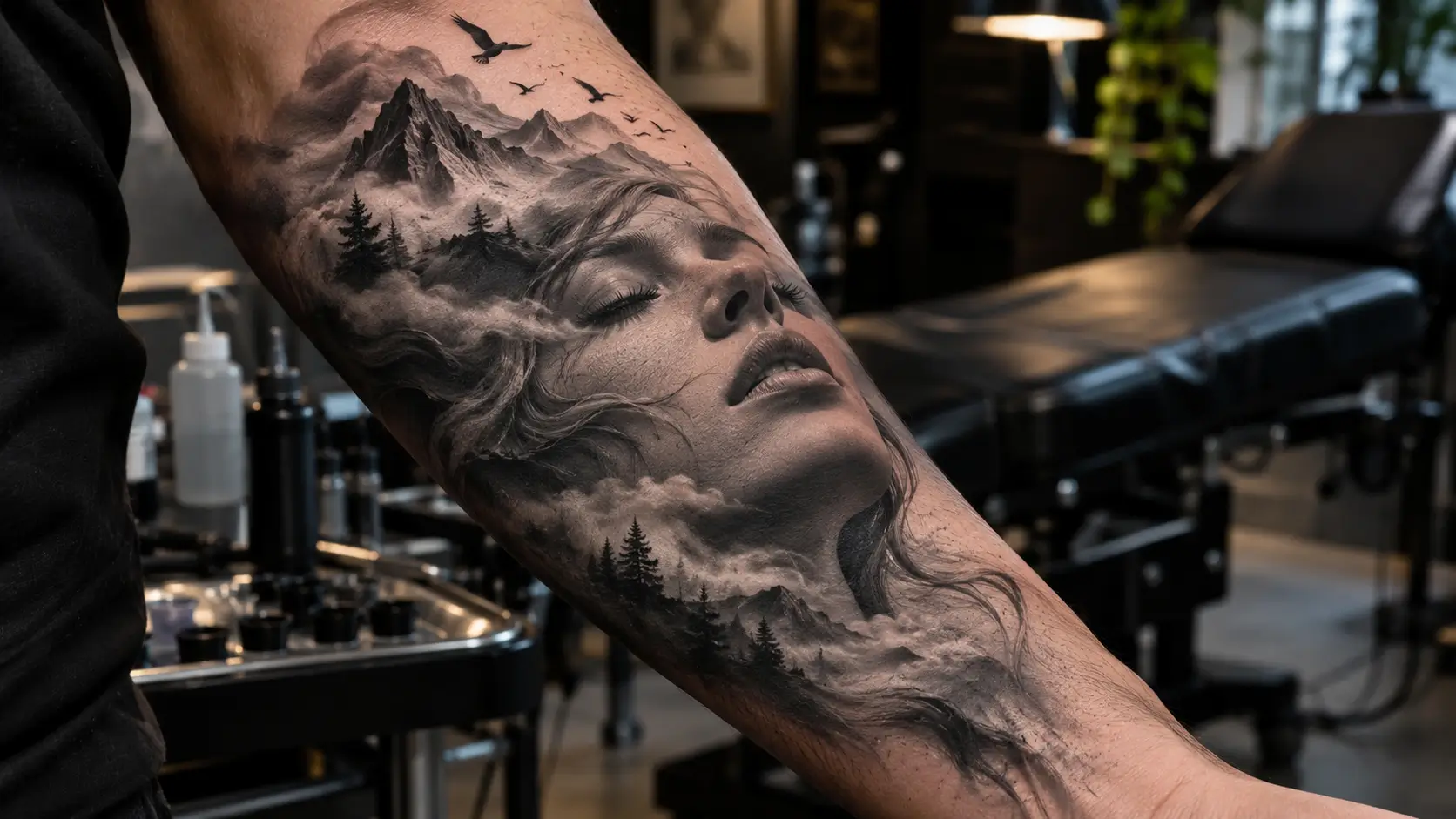
Surreal black-and-gray tattoos in 2026 bring impossible ideas to life through realistic shading, symbolic imagery, and unexpected transitions. A portrait might dissolve into a mountain landscape, a tree may grow from a clock, or a doorway could open onto a sky filled with stars. The subject appears convincing at first glance, but the scene follows the logic of a dream rather than the physical world.
This style offers a different direction from conventional realism. Instead of reproducing one photograph accurately, artists combine several familiar things into a single visual story. Gray wash, deep blacks, open skin, and subtle transitions help connect those ideas without relying on bright colors.
Recent reporting supports the style’s current relevance: Tattoo Life featured surrealistic black-and-gray artists in May 2026, and Afterlife’s October 2026 trend analysis notes growing visibility for surreal and morphing compositions.
What Is a Surreal Tattoo?
A surreal tattoo intentionally combines objects, places, figures, or events in ways that cannot exist in ordinary reality. Its power comes from the contrast between believable visual detail and an impossible relationship: an eye becomes a moon, a building floats above clouds, or water flows through an open book.
It may look photographic, illustrated, or somewhere between the two. The artist controls scale, lighting, and transitions so the viewer can understand how the individual forms belong together. A successful design does not need dozens of unrelated symbols. Sometimes one thoughtful transformation tells a stronger story than a crowded scene.
Why Black-and-Gray Surrealism Is Getting Attention
Black-and-gray work gives the artist a strong range of dark-to-light values without requiring many pigments. This can be useful when several visual ideas must blend within one tattoo. Shadows can conceal a transition, light can lead the eye toward a central subject, and untouched skin can create separation around delicate forms.
A 2026 Killer Ink feature on surreal tattoo techniques discusses edge control, packing blacks, and blending tones. Those artistic choices matter because blurred edges and crisp boundaries tell the eye which objects belong in the foreground and which appear farther away.
Popular Surreal Black-and-Gray Tattoo Ideas
Faces That Become Landscapes
A human face may gradually turn into mountain ridges, water, smoke, clouds, or branches. These designs can suggest memory, change, identity, or the connection between people and nature. Choosing one clear transition helps the central image remain readable.
Clocks, Doorways, and Impossible Architecture
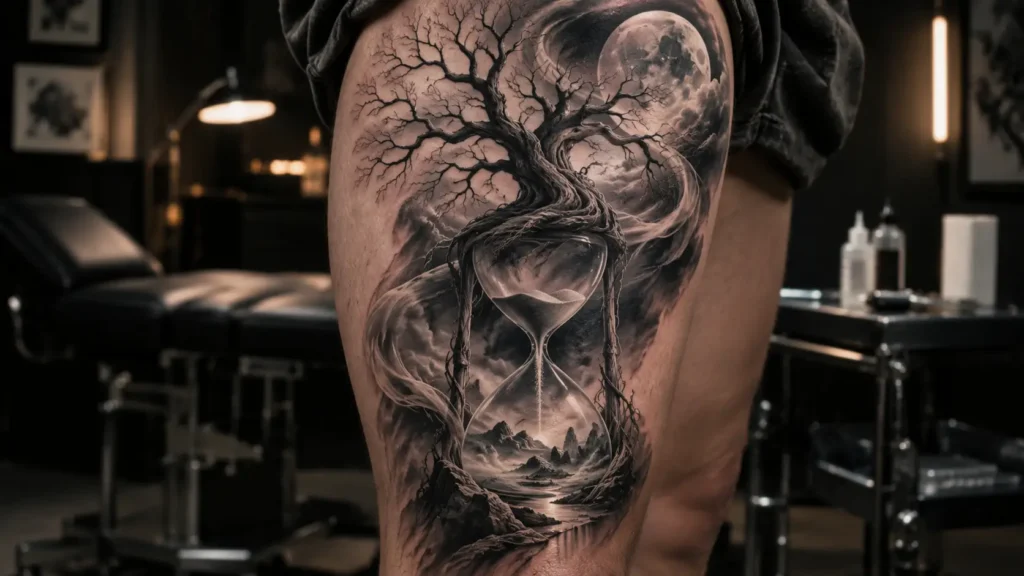
A staircase leading into a sky or a clock merging with a tree creates a feeling of time passing or reality shifting. Architectural objects also provide clean geometric edges that contrast with the soft gray shading of clouds and faces.
Animals and Botanical Transformations
Wolves formed from smoke, birds emerging from flowers, and deer antlers becoming forests can connect wildlife with symbolic ideas. The silhouette should remain identifiable even when the interior carries detailed imagery.
Underwater and Cosmic Dreamscapes
A jellyfish above a city, planets inside a shell, or an ocean pouring from an hourglass can create surreal depth. These concepts benefit from an intentional light source so the different subjects feel connected rather than pasted together.
The Difference Between Surrealism and 3D Illusion Tattoos
Both styles may use realistic shadows, but their purpose is not the same. A 3D illusion tattoo tries to make an image look physically raised, recessed, or attached to the skin. A surreal tattoo asks the viewer to accept an impossible concept, often within a flat illustrated or photographic-looking scene.
For a look at optical depth and realistic shadow placement, read Painless Ric’s 3D Illusion Tattoos in 2026. Surrealism uses some of those tools but emphasizes meaning, visual metaphor, and transformation.
How Tattoo Artists Build a Dreamlike Composition
Artists often begin by choosing one main visual relationship. For example, a client may want to connect a portrait with a childhood landscape. The artist then decides where the face ends, where the landscape begins, and what lighting makes the transition believable.
Scale is especially important. A tiny face surrounded by large abstract details can lose its importance, while multiple similarly dark sections can blend into one unreadable mass. Artists may use bright skin breaks, mist, clouds, or darker framing to preserve a focal point.
According to Tattoo Life’s overview of surrealistic black-and-gray tattooing, this style draws much of its impact from imaginative subjects working with light, texture, and precise shading. The key is making technical realism support the story instead of overwhelming it.
Best Placements for Surreal Tattoos
Forearm
The forearm can support a vertical transformation from one subject to another, such as a face above a landscape or a clock opening into clouds. It is a useful location for medium compositions with a clear direction.
Outer Upper Arm and Shoulder
Rounded areas offer space for portraits and larger focal subjects. Supporting forms can wrap around the shoulder, but the main face or object should be positioned where it remains recognizable.
Thigh and Calf
These placements work well for longer narrative scenes and complex shading. A thigh can accommodate larger changes in scale without forcing important details too close together.
Back and Chest
Broad surfaces allow ambitious dreamscapes with multiple subjects. Larger placement does not remove the need for a focal point; it makes thoughtful composition even more important.
Choosing a Subject With Personal Meaning
Surreal artwork works especially well when the unlikely combination has a personal reason behind it. A doorway may represent opportunity, a tree might symbolize a family relationship, or a familiar landscape could connect to a major life event. Meaning does not need to be immediately obvious to other people.
Bring photographs, written ideas, and artwork that explain the atmosphere you want. Rather than asking for a direct copy of someone else’s composition, identify what you like: the texture of the clouds, the transition between subjects, or the balance between darkness and open skin.
How Surreal Black-and-Gray Tattoos Age
The design should remain understandable after tiny details soften. Clear contrast and generous spacing help important shapes stay separate, but no tattoo is immune to changes caused by skin aging or sun exposure. Dense gray textures may gradually appear less distinct, especially if too much detail is packed into a small space.
Painless Ric’s Tattoo Aging Guide explains how placement and care can affect the long-term appearance of ink. The American Academy of Dermatology’s tattooed-skin guidance recommends appropriate sun protection once a tattoo has healed.
How to Choose a Surrealism Tattoo Artist
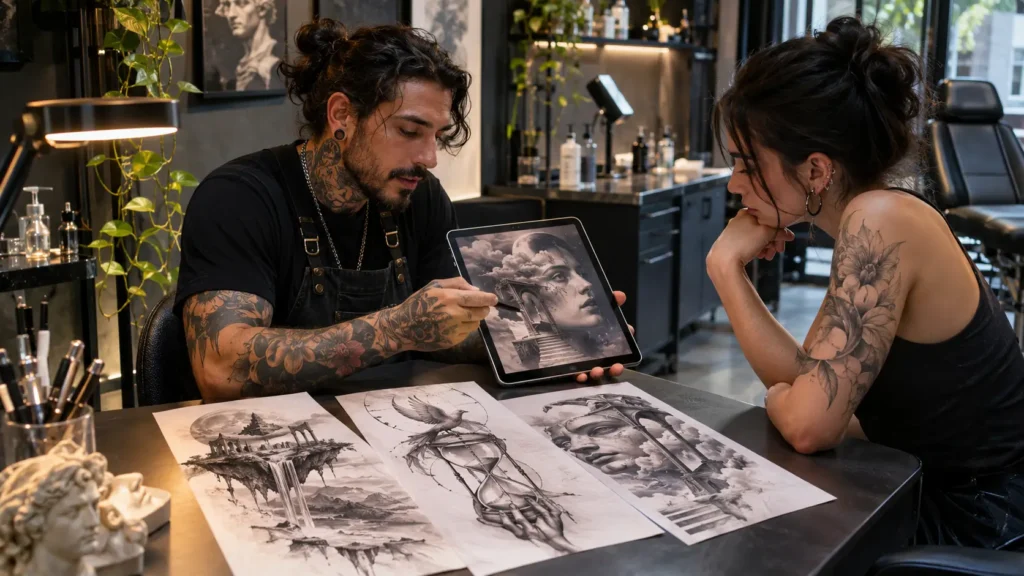
Look for a portfolio that demonstrates both convincing realism and original compositions. A good portrait artist may not automatically excel at transitions between unrelated objects. Search for healed examples where faces, landscapes, or architecture remain legible and the lighting looks coherent throughout.
Discuss what can fit safely within the intended space. An artist may recommend expanding the design or simplifying a complicated scene. Strong concepts benefit from restraint; one successful visual transformation often has more impact than many disconnected symbols.
Tattoo Safety and Aftercare
Even when the artwork is complex, the basics of tattoo safety remain the same. Choose a trained professional who uses appropriate hygiene, single-use needles, and safe ink handling. The FDA provides information on tattoo ink risks, while Mayo Clinic discusses precautions to consider before receiving a tattoo.
After your appointment, follow the artist’s care instructions. The Cleveland Clinic explains general healing and skin-care practices. Painless Ric’s Tattoo Aftercare Guide provides additional advice on cleaning and maintenance. Seek medical attention if redness spreads, pain worsens, pus develops, or you experience fever.
Final Thoughts
Surreal black-and-gray tattoos in 2026 give artists and collectors a way to combine believable detail with imaginative storytelling. Faces, animals, architecture, landscapes, and ordinary objects can merge into personal artwork that feels mysterious without being random. The strongest pieces balance their symbolic concept with clear contrast, appropriate scale, skilled execution, and careful aftercare.